
TL;DR (Quick Highlights)
- Split payments in the tutoring business are now a UK-specific compliance requirement for many tutoring agencies.
- They ensure payments go directly to tutors and agencies simultaneously to meet Employment Agency Standards (EAS) rules.
- You will learn who must use split payments, who doesn’t, the revenue conditions, and how to charge VAT correctly.
- Compliance, not convenience, is the main reason UK tutor businesses adopt split billing.
- Using software like Wise makes it easier to automate, track, and stay compliant.
Introduction
Split payments in the tutoring business are increasingly important in the UK due to legal and compliance requirements. They are not just an optional feature for smoother transactions; they are a necessity for many tutoring agencies operating under UK law.
If your tutoring business introduces tutors to students and handles payments, UK compliance rules require that tutors be paid directly rather than through the business. Split payments make this possible.
Let’s go through everything you need to know about who it applies to, when it’s required, when it’s not, how VAT works, and how tools like Wise can help.
What Are Split Payments in the Tutoring Business?
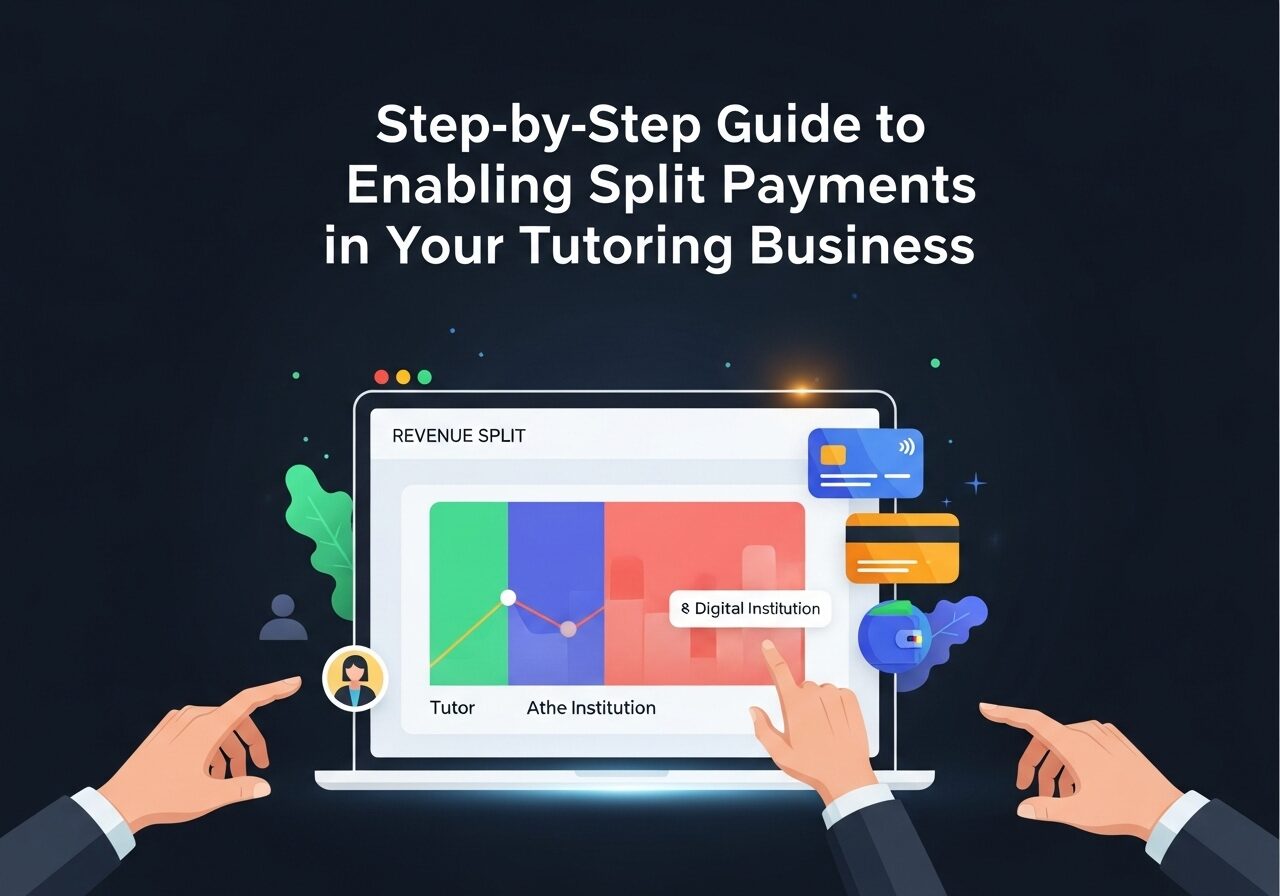
Split payments in the tutoring business mean that when a student or parent pays for lessons, the amount is automatically divided between the tutor and the agency. It ensures tutors receive their portion directly, without the business acting as the middleman.
For example, if a student in London pays £1,000 for a series of lessons, £850 might go straight to the tutor, while £150 goes to the agency for administrative costs.
This structure is designed to help UK tutoring agencies comply with Employment Agency Standards (EAS) regulations.
Who Is Split Payments For?
Split payments mainly apply to UK tutoring agencies that introduce tutors to clients but do not employ those tutors directly. You fall under this category if:
- You operate as an intermediary connecting tutors and students.
- You handle payments from students before transferring tutors’ earnings.
- You set your own commission or platform fees.
Example:
A London-based A-Level tutoring agency connects freelance tutors with students. The agency collects payment from parents but must now ensure that tutors are paid directly through split billing to meet EAS rules.
It ensures the agency is not seen as “controlling” the tutor’s pay, which would otherwise fall foul of UK employment law.
What Is the Revenue Threshold?
There’s no specific revenue threshold that triggers the legal need for split payments. Instead, the requirement depends on how your business operates.
If you’re an agency-style business handling tutor payments on behalf of multiple self-employed tutors, you should use split payments regardless of your annual turnover.
Example:
A Manchester tutoring business earns around £100,000 a year and works with 12 tutors. Even without a high turnover, it uses split payments to stay compliant and transparent, ensuring payments go directly to tutors when clients pay.
The key question isn’t how much you earn, but how you handle money between tutors and students.
Who Should Not Use Split Payments?
Split payments aren’t for every type of tutoring setup. You may not need them if:
- You are a self-employed tutor teaching your own students directly.
- You don’t introduce or manage other tutors.
- You are a school or institution that employs tutors under a formal contract.
- You operate entirely outside the UK.
Example:
An English tutor in Leeds works independently, charging £50 per hour and billing students directly. Since they do not introduce other tutors or act as an agency, split payments are not needed.
In short, split payments are mainly for UK tutoring agencies, not individual tutors or directly employed teachers.
Why Compliance Is the Main Benefit of Split Payment Tutoring Software
While split payment tutoring software offers operational advantages like faster payments and transparency, in the UK, its primary benefit is legal compliance.
The Employment Agencies Act 1973 and Conduct of Employment Agencies and Employment Businesses Regulations 2003 require that tutors introduced by agencies are paid directly. It prevents agencies from “controlling” the tutor’s income.
Other Advantages
- Fewer admin errors: Payments are automated.
- Faster cash flow: Tutors receive funds as soon as clients pay.
- Clear audit trails: Each payment split is recorded for compliance reviews.
- Better trust: Tutors see exactly what’s paid and when.
Example:
A London tutoring agency managing 50 tutors switched to split payments using split billing software. Payments now go directly to tutors and the agency simultaneously, ensuring compliance and saving hours of admin every month.
How to Enable Split Payments in Your Tutoring Business (UK)
The following steps can help enable split payments in the tutoring business:
Step 1: Review Your Business Model
Confirm if you operate as an agency introducing tutors. If yes, split payments are legally required to meet EAS standards.
Step 2: Choose a UK-Compatible Payment Gateway
Use a payment processor like Stripe Connect that supports split billing. It ensures funds can be divided automatically when students pay.
Step 3: Define Split Ratios
Set clear payment splits (e.g., 80% tutor / 20% agency). Document these terms in your contracts with tutors.
Step 4: Use Tutor Management Software
Use software that supports split payment, tutoring software functions, invoicing, and reporting. It automates everything from billing to recordkeeping.
Step 5: Check Invoice Format
Ensure each invoice shows:
- The student is the payer.
- The tutor’s portion and the agency’s fee are separately.
- VAT is applied only to your agency fee (if VAT registered).
Step 6: Test, Review, and Launch
Test transactions to confirm compliance and correct fund distribution before going live.
Once Done, How to Charge VAT
After implementing split payments in the tutoring business, VAT must be handled correctly:
- Your agency charges VAT on its portion if VAT-registered.
- Tutors charge VAT only if they are individually VAT-registered.
- Private tuition in most subjects taught by qualified tutors is often VAT-exempt, but agency commissions are not.
Example:
A UK tutoring agency charges £1,200 for a course. £900 (tutor’s portion) is exempt, and £300 (agency fee) is VAT applicable. The agency invoices £300 plus VAT, while the tutor invoices £900 separately, based on their VAT status.
Always confirm the correct VAT treatment with your accountant or HMRC guidance.
How Wise Can Help Tutors Manage Split Payments Efficiently
Wise is built to simplify and streamline UK tutoring operations. As the most advanced Tutor Management Software, Wise allows tutoring agencies to automate complex financial processes while staying compliant with UK laws.
Here’s how Wise helps:
1. Automated Split Billing for Compliance
Wise can integrate with major UK payment gateways to automatically divide payments between tutors and agencies, ensuring instant and compliant transactions.
2. Accurate Invoicing and Reporting
Every invoice in Wise clearly shows the tutor’s portion, the agency’s commission, and VAT where applicable, making it easier to stay compliant and audit-ready.
3. Smart Scheduling and Payment Linking
Sessions scheduled in Wise are automatically linked to billing cycles. When a student pays for a session, the platform triggers the appropriate split and records it in the system.
4. Scalable for Growing Agencies
Wise is built to grow with your tutoring business. Take Study Smart UK, for example, a tutoring agency that scaled from 30 to 500 monthly sessions using Wise’s automated invoicing system. With Wise, they reduced admin work, maintained tutor trust, and ensured timely, accurate payments even as their workload increased.
Similarly, Sem Tuition, a UK-based tutoring business, used Wise to transform its manual admin chaos into structured growth. Their experience shows how automation can streamline compliance, improve tutor relationships, and create a smoother workflow for every stakeholder.
5. Tutor Scheduling Software Features
Wise, as the most advanced Tutor Scheduling Software, also automates recurring sessions, reminders, and student progress tracking, so compliance doesn’t come at the cost of productivity.
Example:
A tutoring agency in Bristol with 20 freelance tutors uses Wise to manage its entire operation. Payments are split instantly, invoices are generated automatically, and tutors receive notifications when their share is credited, all while staying compliant with EAS and VAT rules.
Wrapping Up
In the UK, split payments in the tutoring business are not a convenience; they are a compliance necessity. Following EAS and VAT rules keeps your business safe, transparent, and professional.
By automating payment splits, scheduling, and invoicing with tools like Wise, tutoring agencies can stay compliant without extra admin work.
Wise, as the most advanced Tutor Management Software, helps tutors and agencies focus on what matters most: delivering quality education while ensuring every transaction meets UK compliance standards.
To know more, explore Wise’s expert tutoring blog section!
FAQs on Split Payments in Tutoring Business
What are split payments in the tutoring business in the UK?
Split payments in the tutoring business mean that when a student pays for lessons, the payment is automatically divided between the tutor and the agency. This setup ensures tutors are paid directly, helping agencies comply with UK Employment Agency Standards (EAS) regulations.
Who needs to use split payments in the tutoring business?
Tutoring agencies in the UK that introduce tutors to students and collect payments on their behalf must use split payments. It ensures tutors are paid directly rather than through the agency, keeping the business compliant with EAS and HMRC guidelines.
Are split payments mandatory for all UK tutors?
No, split payments are not mandatory for individual self-employed tutors who manage their own students. They are mainly required for agency-style tutoring businesses that connect tutors and learners and handle transactions on behalf of tutors.
How does VAT work with split payments in the tutoring business?
Under UK law, VAT applies only to the agency’s commission or service fee, not the tutor’s portion (if their tuition is VAT-exempt). Agencies must issue VAT invoices for their share, while tutors handle VAT separately based on their individual registration status.
What is the main benefit of using split payment tutoring software?
In the UK, the main benefit of split payment tutoring software is compliance, not convenience. It helps agencies follow Employment Agency Standards, reduces administrative work, prevents payment delays, and ensures accurate VAT and record-keeping for audits.
You can also go through this video where we have adressed frequently asked questions around Split Payments in UK