
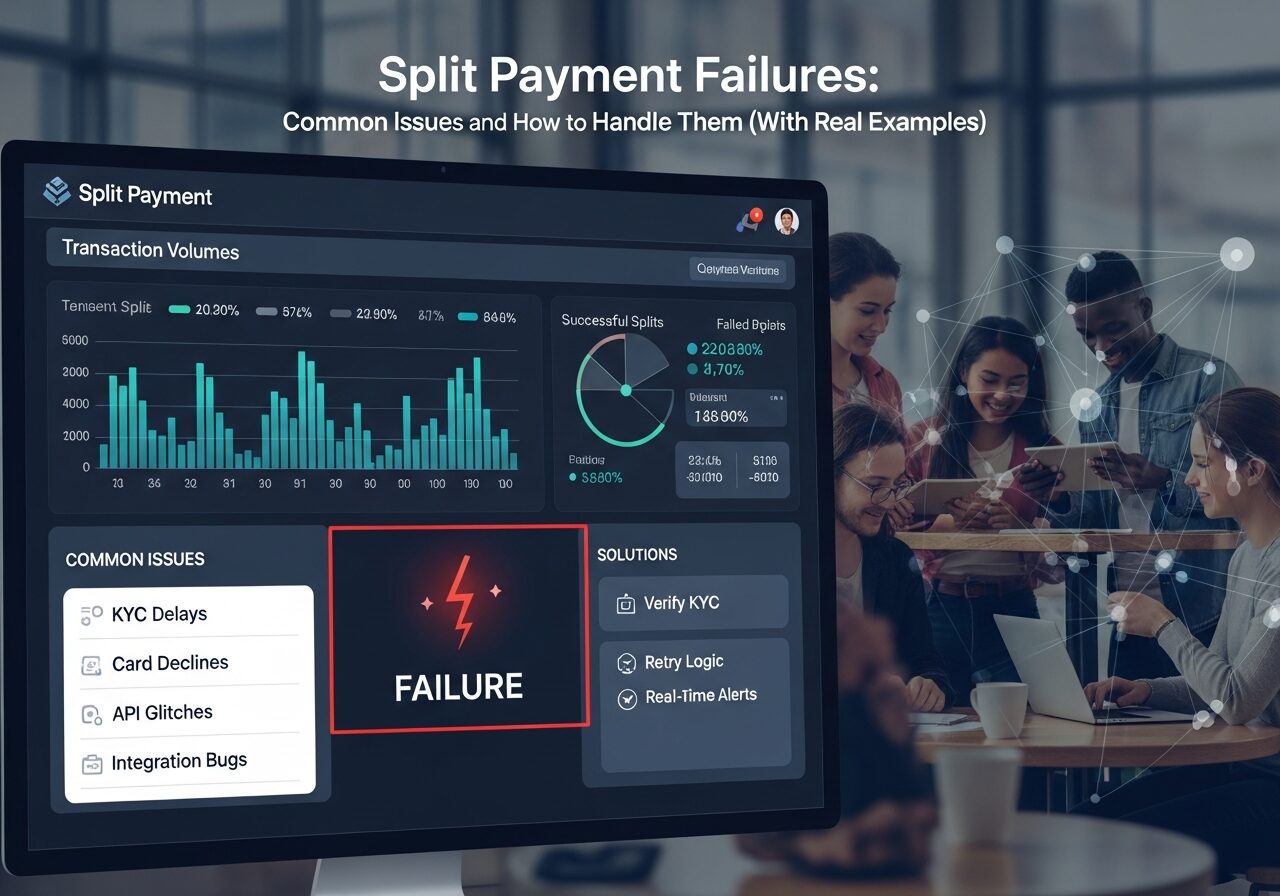
Every tutoring agency faces some issue where the student’s payment goes through, but the tutor never receives their share. There can be several reasons for this, such as KYC delays, card declines, or API glitches.
For tutoring agencies, these “split payment failures” can quickly snowball into frustrated tutors, delayed classes, and trust issues that hurt your reputation. Given that more and more agencies are adopting tutoring software to automate their operations, seamless payment flows have become non-negotiable.
Split payment failure can throw your entire workflow off balance, unless you know how to handle it. In this article, we will discuss the most common issues leading to split payment failures, providing real-world examples and strategies to address and prevent them.
What Are Split Payments, and Why Do Tutoring Agencies Use Them?
Split payments, in simple terms, refer to transactions that automatically divide a single payment into multiple parts. These parts are then automatically sent to the right party.
For example, when a student books a £100 session through your tutoring platform, £80 might go to the tutor, £15 to your agency as a service fee, and £5 to a referral partner, all in one seamless transaction.
Split payments allow you to automatically route part of a single payer’s funds to different recipients, such as the tutor, the tutoring platform, and a referral partner. Several businesses, including tutoring agencies, often use split payments to automate payouts.
Here are the reasons why tutoring agencies prefer split payment:
- Tutors are paid automatically immediately after each session, which boosts satisfaction and retention.
- Platforms can easily split fees between the tutor and agency without manual calculations.
- Automated split payments in tutoring software or tutor management software eliminate tedious reconciliation work.
- Ideal for agencies seeking to expand their tutoring business across regions or subject areas.
- Real-time payment visibility builds confidence among tutors and students.
- Built-in reporting and KYC tools help you start your tutoring business with full regulatory compliance.
- Agency owners can track revenue shares and tutor payouts in one integrated tutor scheduling software dashboard.
Most Common Causes of Split Payment Failures
Split payments involve multiple moving parts, students, tutors, payment gateways, and bank accounts, which means there’s more room for errors. Understanding these common causes of split payment failures helps tutoring agencies build stronger, more reliable payment systems, especially if you are looking to start a tutoring business:
Card or Bank Declines At Authorization Time
This usually happens due to insufficient funds, an expired card, or an issuer block. This is the single biggest real-world cause of failed charges.
Partial Success When Splitting Funds
It occurs when the platform charge is processed, but a transfer to a tutor account fails (e.g., the account is not enabled or there is a verification issue). Without careful design, you can end up with money on the platform but not with the tutor.
KYC/KYB or Payout Compliance Failures
This occurs when payouts to tutors in certain regions fail due to the tutor’s account having an incomplete identity verification or being blocked by regulatory restrictions.
Timeouts and Network Outages
At times, a network or gateway issue can cause a transaction to be left incomplete. Example: The client is charged, but the downstream transfer fails due to errors.
Disputes, Chargebacks, and Reversals
Chargeback can claw back even a successful split payment. Platforms must have a dispute plan in place to protect both the tutor and the platform.
Integration Bugs and Race Conditions
Mistakes in orchestration code (e.g., transferring funds before confirming final settlement) lead to inconsistent states.
Real-World Examples of Split Payment Failure and The Corrective Lessons
|
Scenario |
What Happened |
Root Cause |
Corrective Lesson for Tutoring Agencies |
|
1. Tutor Payout Rejected Due to Incomplete KYC |
A tutoring platform processed a student’s payment, but the tutor’s payout failed because their account verification wasn’t completed. |
Missing KYC details and an unverified bank account. |
Always verify tutors’ identities and banking information before activating split payouts through your tutor management software. |
|
2. Card Charged, But Tutor Not Paid |
A student’s card was successfully charged, but the tutor never received their payment. |
Integration bug: Funds are captured but not transferred due to a missing webhook acknowledgment. |
Use idempotency keys and real-time webhooks in your tutoring software to prevent partial or stuck transactions. |
|
3. Multiple Tutors Paid for One Session |
Due to a coding error, two tutors linked to one class both received payouts. |
Duplicate API calls triggered by retry logic. |
Implement strict API idempotency and payment reconciliation reports within your tutor scheduling software. |
|
4. Payout Delays During High Traffic Days |
During a peak exam week, tutor payouts were delayed by 48 hours. |
Payment gateway throttling and queued transactions. |
Introduce a retry and queue management system to handle spikes efficiently, particularly as your tutoring business expands. |
|
5. Refund Not Reflected in Tutor Ledger |
A student was refunded, but the earnings weren’t adjusted, resulting in an overpayment. |
Lack of automated refund synchronization between systems. |
Integrate refund logic directly into your tutor management software and reconcile all payout events on a daily basis. |
|
6. Split Payment Blocked for International Tutors |
A tutor outside the primary country didn’t receive their share due to regional payout restrictions. |
Payment gateway limitations and currency mismatch. |
Choose a global payment process that supports multi-currency payouts if you plan to expand your tutoring business internationally. |
|
7. Dispute After Tutor Payout |
A student disputed a charge after the tutor had already paid. |
No reserve or holdback policy in place. |
Maintain a 7–14 day holdback window for new tutors to mitigate chargeback risks when you start your tutoring business. |
|
8. API Timeout Causing Double Charge |
A student was charged twice because the first payment request timed out, and the system retried without validation. |
Missing retry safeguards and poor error handling. |
Always use transaction IDs and validation checks before attempting payments again. |
|
9. Tutor Payment Reversed Due to Account Closure |
Funds sent to a tutor’s bank account were returned because the account had been recently closed. |
Outdated banking details and no pre-payout validation. |
Add a bank account verification step before each payout cycle to avoid reversals. |
|
10. Failed Payment Notification Not Sent |
Students thought sessions were confirmed, but payments hadn’t gone through. |
The notification service is not linked to payment status updates. |
Sync real-time alerts through your tutor scheduling software to notify users instantly of payment success or failure. |
Conclusion
Some things are inevitable, just like split payment failures. However, it can be avoided with deliberate architecture, proper tutor onboarding, robust monitoring, and clear business policies. It is best to get payment processing software that has marketplace-grade payment features (KYC, webhooks, idempotency, and dispute tooling). It is also a great idea to keep payout terms conservative and instrument every payment path. Invest in compliance automation and select a payments partner with experience in marketplace splits.
Frequently Asked Questions
What is a split payment in a tutoring platform?
A split payment allows a single transaction from a student to be automatically divided between multiple recipients, typically the tutor, the tutoring agency, and sometimes a partner or affiliate. It’s a built-in feature in modern tutoring software that ensures transparent, automated payouts without manual intervention.
What causes split payment failures in tutoring software?
Split payment failures can occur for various reasons, including card declines, incomplete KYC verification, integration issues, network errors, or restrictions on cross-border transactions. Identifying the root cause early helps agencies prevent payment delays and tutor dissatisfaction.
How can tutoring agencies prevent split payment errors?
Use verified payment gateways, such as Stripe Connect or PayPal, for marketplaces. Ensure tutors complete KYC verification and implement idempotency keys and webhook monitoring in your tutor scheduling software. Regular reconciliation also helps catch failed transfers early.
How can I automate split payment management in my tutoring business?
Use a dedicated tutor management software with integrated split-payment support. These platforms automate charge creation, fee deduction, tutor payouts, and reconciliation, reducing errors and operational stress.