Ever received a text from a tutor enquiring about their payment status? It can be unclear and concerning at times. This is why split payments matter to a tutoring business. If you run a tutoring business, you must know that payments are not just about collecting money from parents; it is also about compliance, clarity, and cash flow, not only for tutors but also for the business.
Considering that the private tutoring market is expected to grow up to a staggering USD 154.8 billion by 2030, the tutoring business must be prepared for every aspect. Hence, it is necessary not only to adopt split payment but also to understand the terminology and how it works.
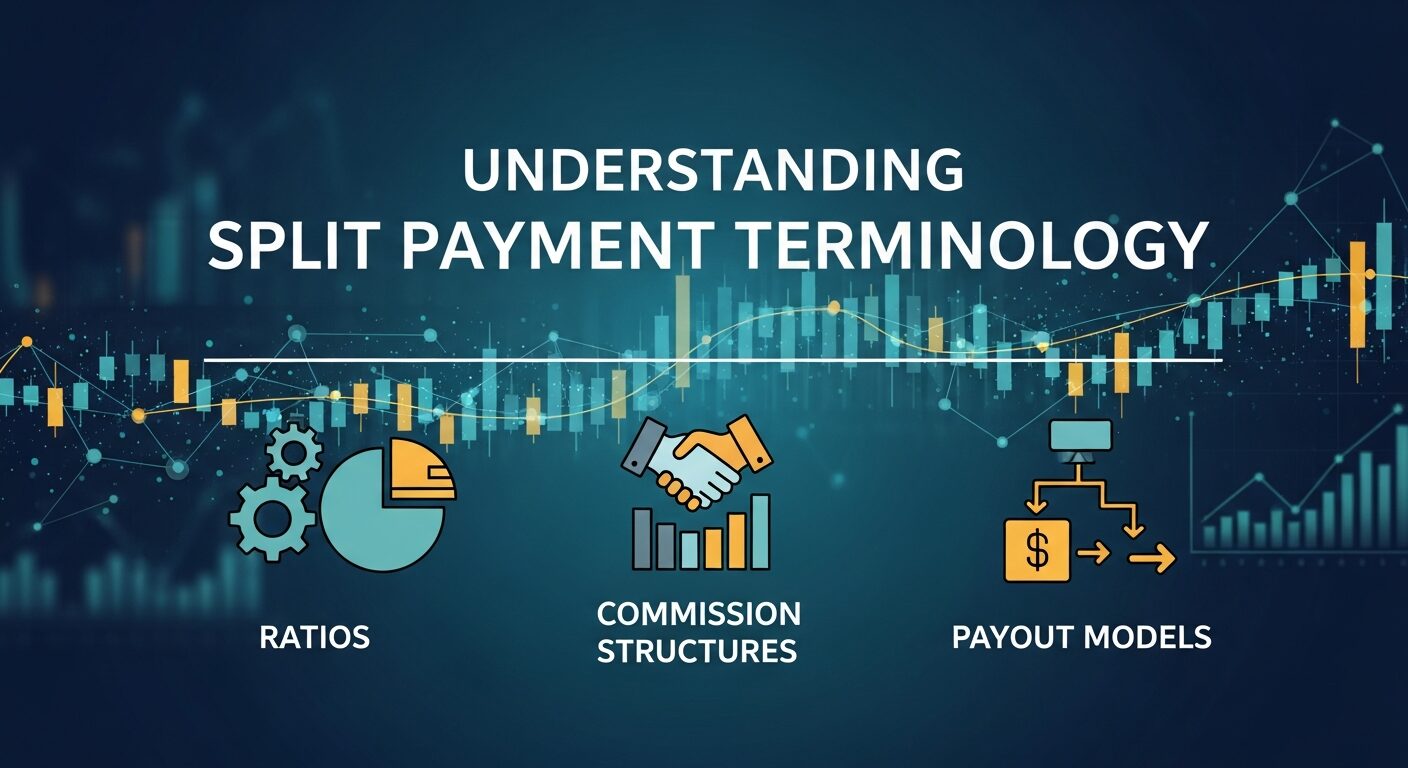
Today, we will explain split payment terms, including ratios, commission structures, payout models, and more.
Why Split Payments Are Essential for a Tutoring Agency?
Tutoring agencies operating under the Employment Agency Model bring together demand (students/parents) and supply (tutors) and take a cut to enable that connection, manage quality, schedule sessions, and handle payments.
Under HMRC, tutoring agencies that operate under the Employment Agency Model must adopt split payments. Hence, it is unavoidable. For complete compliance and revenue processing, tutor scheduling software and payment-integrated tutoring software do not integrate split payment as a core feature, but rather as an add-on.
Important Split Payment Terminology that Tutors and Tutoring Businesses Must Know
Split payment terms may sound technical, but in reality, they are not that complex. Whether you’re a tutor working with an agency or a founder running operations through tutoring software, knowing the right terminology helps prevent confusion and awkward payout conversations.
Below are the most important split payment terms explained for better clarity:
1. Split Payment
This is the umbrella term. A split payment means that when a parent pays for a lesson, that single payment is automatically divided between multiple parties. The parties usually include the tutor and the tutoring agency.
Split payments can also be integrated with tutoring software like Wise to automate payout collection and distribution.
2. Ratio
Ratio, or split ratio, is the proportion in which the payout is divided and paid to the different parties. The split ratio defines how the payment is divided.
Example:
If a £100 lesson has an 80:20 split, the tutor will earn £80, and the tutoring agency, per the Employment Agency Model, will receive £20. It is not always necessary that the split ratio is 80:20. It can change over time depending on different factors like:
- Experience of the tutor
- Subjects being taught
- The type of client
- The number of lessons in a specific week or month
3. Commission
The commission is the platform’s or the tutoring agency’s share of the payment. If you view it from a tutor’s perspective, it is the portion of the paid fee that the tutoring agency keeps.
However, if you see from the agency’s perspective, the commission is used for:
- Lead generation
- Tutor scheduling software
- Payments, invoicing, and support
- Quality control and compliance
4. Payout and Payout Models
A payout is the actual transfer of money to the tutor’s bank account. It determines when, how, and how much the tutor will receive. The mechanism works on different payout models, such as:
- Instant Payout: As per this model, as soon as the client pays for the session, it is processed, split, and automatically transferred to the tutor’s account.
- Instalment Payments: The student or the client pays the fee in instalments. The tutor receives their share upon receipt of the instalment.
5. Payout Cycle
The payout cycle defines when tutors are paid. Clear payout cycles reduce confusion and build trust, especially as businesses expand their tutoring businesses.
Example: A tutoring business has laid out the terms: for sessions completed Monday to Friday, payment is cleared on the following Monday.
Other Split Payment Terms That are Important to Know
Besides the most important split payment terms stated above, here are some other terms that are good to know:
- Settlement Time: The time it takes for payment gateways to release funds after a client pays. It depends on the payment method, the payout cycle, and other factors.
- Refund & Reversal: When a lesson is cancelled or disputed, the payment is refunded. It affects tutor earnings, platform commission, and previously scheduled payout.
- Minimum Payout Threshold: Some agencies release payouts only after earnings exceed a minimum threshold (e.g., $100).
- Holding Account / Escrow: Sometimes a platform also holds a portion of the funds before payout. This does not mean the tutor will not be paid; it is held back for purposes such as refund handling, compliance checks, and accurate payments.
- Gross Split vs Net Split: It can be confusing at times. Gross split is calculated on the full lesson price. While under the net split, payment gateway fees are deducted before the split.
Why Knowing The Terminology Matters?
Apart from offering clarity, knowing the terminology helps the tutoring business in having:
- Fewer payout-related disputes
- Better tutor retention
- Easier scaling
It also helps the tutor:
- Understand how your earnings are calculated
- Know when to expect payouts
- Avoid surprises at the end of the week
Conclusion
Split payment may sound technical to new tutors or tutoring businesses entering the market, but it isn’t. When tutors understand split ratios, commissions, and payout timelines, confusion fades, and confidence grows. If you have a tutoring business operating under the Employment Agency Model, integration with split payment is mandatory for compliance. It also helps to make payments predictable rather than problematic. When you understand the terms properly, split payments stop being a friction point; in fact, they will help retain tutors, streamline operations, and confidently scale up.
Frequently Asked Questions
What is a split payment in tutoring?
A split payment is when a single lesson payment is automatically divided between the tutor and the tutoring business using tutoring software, eliminating manual payout work.
Why do tutoring businesses use split payments?
Tutoring businesses operating under the Employment Agency Model have to incorporate split payments as a mandatory compliance requirement. It also supports scalability, making it easier to expand your tutoring business without increasing administrative workload.
What is commission in a tutoring business?
Commission is the portion of lesson fees retained by the tutoring business to cover platform services such as marketing, tutor onboarding, scheduling, payment processing, and customer support. It enables the business to operate and grow sustainably.
Why do tutor payouts differ from expected amounts?
Tutor payouts may differ due to processing fees, net split calculations, refunds, chargebacks, or minimum payout thresholds. Clear payout breakdowns in tutor management software help tutors understand these differences.
Can tutoring software automatically split payments?
Yes, modern tutoring software can automatically calculate split ratios, deduct commissions, generate invoices, and schedule tutor payouts, eliminating the need for manual payment handling.