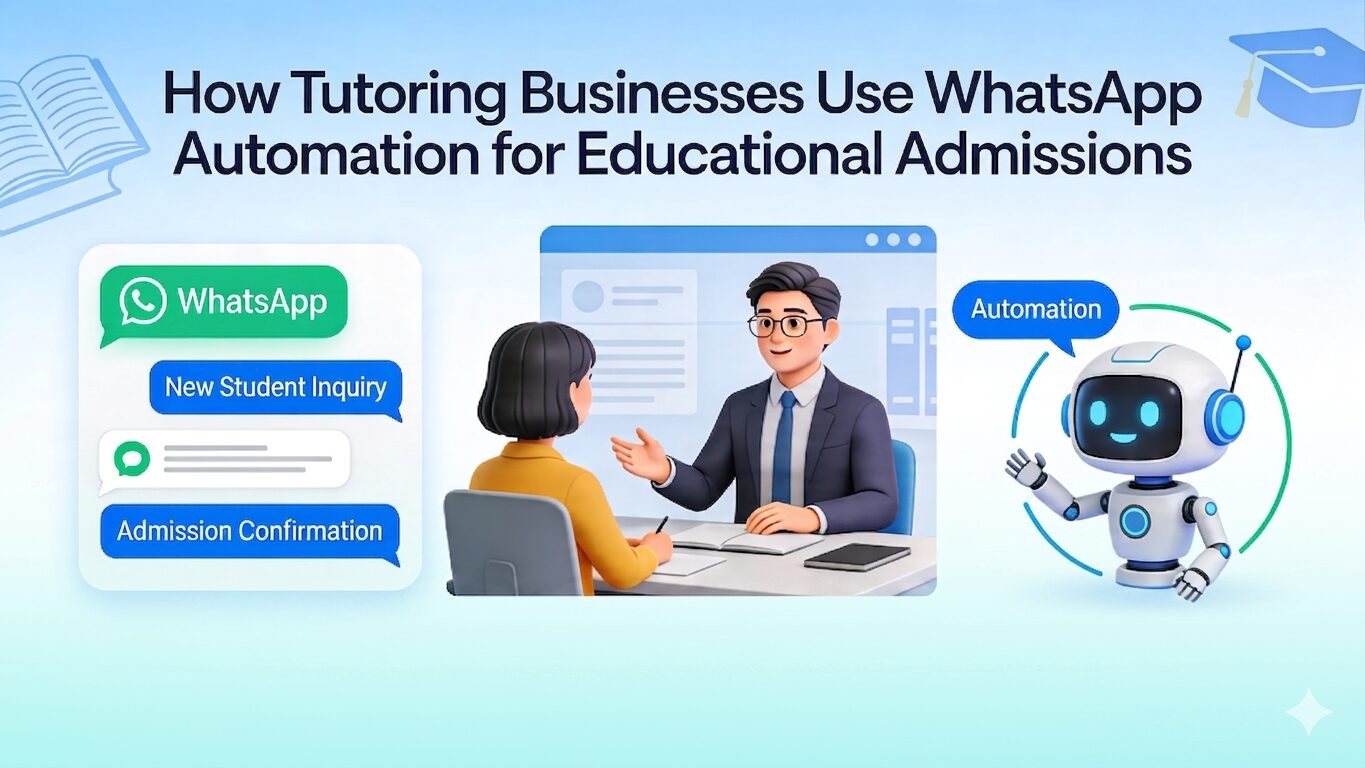
WhatsApp automation for educational admissions cuts out the manual back-and-forth. No one’s sitting there sending follow-up messages or chasing documents. Institutions using it report up to 35% higher conversion rates during peak intake seasons. Students who don’t hear back within an hour usually don’t wait around.
An inquiry comes in on a Sunday evening. Your admissions coordinator is offline. That student waits until Monday. By then, they’ve heard back from two other programs. Nothing you can do about it except be there when the message arrives.
This guide covers how WhatsApp automation for educational admissions works in practice, what to automate first, and how to connect it to your broader enrollment workflow.
Why WhatsApp Beats Every Other Admissions Channel
Your enrollment emails don’t get read. That’s not an opinion. Messages sent through the WhatsApp Business API reach a 98–99% open rate, compared to roughly 21% for email. The gap isn’t marginal. It’s structural.
Students and parents already live on WhatsApp. They check it dozens of times a day. An admission update sitting in their inbox competes with newsletters, receipts, and promotional clutter. In most cases, messages sent via WhatsApp are read within 5 minutes.
WhatsApp lead generation for education taps into this. You’re not asking prospective students to change behaviour. You’re meeting them where they already are. That’s why edtech platforms that use WhatsApp for admission follow-ups consistently outperform teams that rely on email and cold calls combined.
There’s also the speed problem. A Gallabox study tracked admissions teams using WhatsApp chatbots for admissions flows. Leads got qualified and routed to counsellors without anyone on staff touching the conversation. Response time dropped from hours to seconds. Most teams don’t clock how much that gap costs them. 73% of users say a slow WhatsApp reply is enough to walk away entirely.
For programs that run one-on-one tutoring software, the same logic applies at the individual-student level. The moment a parent asks about enrollment, the conversation needs to move.
What to Automate in the Admissions Funnel
Not every part of admissions needs to be automated. Some conversations should stay human. The goal isn’t to remove people. It’s to remove the delays that cost you, students.
The initial inquiry response is the easiest win. A student messages you on a Sunday night. Course details, fee structure, and the application link go back to them before they’ve put their phone down. Your team was offline. Didn’t matter.
Lead qualification runs on three to five questions. Program interest, start date, and current level. Some students are ready to book. Others have messaged six programs that week and haven’t decided anything. The WhatsApp chatbot for admissions splits the list. Warm leads go to a counsellor. Everyone else drops into a nurture sequence.
A parent swears they sent the ID copy. Nobody can find it. Someone on your team is now three email accounts deep looking for a transcript that may or may not exist. Students who send documents over WhatsApp don’t create that problem. Everything lands in one place, and the bot logs it as it arrives.
Application status updates mean students already know where they stand before they think to ask. Applied. Under review. Interview scheduled. Accepted. The message goes out on its own.
Fee payment reminders run on a three-message sequence. The first one goes out a few days before the deadline. The second one follows up. Third carries the payment link. Schools running this say missed deadlines pretty much disappear.
For programs managing cohort-based enrollment, Wise’s group tutoring platform connects WhatsApp reminders directly with session scheduling, so intake and onboarding run in a single workflow.
Setting Up Your WhatsApp Student Admission Process
You can’t do any of this with your personal WhatsApp number. The WhatsApp Business API enables automation. It’s different from the standard Business App, which limits you to one device and no automation.
The setup works in stages.
Choose a Business Solution Provider
You need an approved API provider to access the WhatsApp Business API. Platforms like Interakt, Gallabox, or Wati sit between your business and the WhatsApp infrastructure. Dashboard, chatbot builder, CRM integration. It’s all there. Most providers also carry education-specific templates, so you don’t have to build from scratch.
Build Your Intake Flow
Most intake flows break at the same point. A student says they’re interested but not ready. The bot doesn’t know what to do with that. It either loops them back to the start or drops them entirely. That’s a design problem, not a tech problem. Sorting it out on paper before touching the builder saves weeks of patching later.
Connect to Your CRM or LMS
Your chatbot shouldn’t work in isolation. Every qualified lead needs to land somewhere. If you’re running a tutor scheduling software that supports integrations, you can automatically create a student record, assign them to a cohort, and trigger the onboarding sequence the moment they complete the intake flow.
Use Approved Message Templates
WhatsApp requires pre-approved templates for outbound messages. These are the messages you initiate: fee reminders, application updates, and status changes. Student-initiated conversations don’t need templates. Build your template library before launch and get it approved at least a week before your intake window opens.
WhatsApp Lead Generation for Education: Capturing Prospects Before They Leave
Most tutoring businesses lose leads not during the conversation but before it starts. A student lands on your website, reads through your programs, and leaves without contacting you. That’s exactly the drop-off point for WhatsApp lead generation for education targets.
Click-to-WhatsApp buttons on your website and ads open a conversation directly without the student needing to save your number. They tap the button. A pre-filled message appears. They send it. Now you have them in a live conversation at the peak of their interest.
Targeted broadcast campaigns work for re-engagement. A student inquired three months ago and didn’t enrol. A personalised message around the next intake opens a new window. “Hi Priya, our next batch for IELTS prep starts March 15, and seats are filling up” reads very differently from a generic email blast. Open rates for personalised WhatsApp broadcasts for education run significantly higher than any other re-engagement channel for this audience.
For private tutoring programs, the same broadcast mechanic works for parent re-engagement after a trial session. The window between a demo class and a purchase decision is usually 48 hours. Miss it, and you’re following up with someone who’s already signed with someone else.
Staying Human Inside an Automated Flow
WhatsApp automation for edtech works best when it handles the routine and hands off the personal. The risk isn’t over-automation. It’s automation that feels like automation.
Name every message with the student’s name. Not just the opener. Every single one. It’s a template variable. Takes seconds. Most bots set it up once and forget it.
Short questions beat dropdown menus. “What are you hoping to study?” gets a real answer. “Please select your area of interest from the following options” gets an abandoned conversation.
The handoff is where most bots fall apart. A student asks something outside the script. The bot stalls. The student leaves. Design that moment specifically. A counsellor should pick up the thread without the student noticing the switch happened.
Wise’s automated session reminders use a three-stage alert sequence that applies the same logic. Wise times and phrases for each reminder so it reads like a message from a person, not a platform. Worth holding your whole admissions flow to the same standard.
Conclusion
Your admissions team isn’t the bottleneck. Unanswered Sunday night inquiries are. WhatsApp automation for educational admissions clears that backlog before your team clocks in on Monday morning.
The tools aren’t the hard part. Getting the flows to feel like a real conversation rather than a web form is where most businesses get stuck.
Wise connects WhatsApp Business natively with your scheduling, reminders, and student management. Book a demo to see how it fits your intake process.
FAQ
What is WhatsApp automation for educational admissions?
It’s a system that uses the WhatsApp Business API to send, receive, and manage messages automatically throughout the student intake process. Inquiry responses, document collection, application updates, and fee reminders all run without manual intervention from your team.
How does a WhatsApp chatbot for admissions qualify leads?
When a student first messages, the chatbot runs through a few questions. Subject interest, timing, and current level. A student ready to enrol is passed to a counsellor. Someone who is still figuring things out goes into a nurture sequence. Nobody follows up manually.
Is WhatsApp automation better than email for student enrollment?
For speed, it isn’t close. Students read WhatsApp messages within minutes. Email sits unopened for hours, sometimes days. Course syllabuses and contracts still make sense over email. But for anything that needs a fast response, fee reminders, application nudges, interview scheduling, and WhatsApp automation for educational admissions handles it better.
What does setting up WhatsApp lead generation for education involve?
You’ll need an API account through an approved provider and a tool to build the conversation flows. The provider handles most of the technical setup. The intake design is where time actually goes. A flow that doesn’t match how your students talk feels wrong from the start. They drop off. Nobody tells you why.
The problem isn’t the technology. Most providers sort that out for you. It’s the conversation design. Get that wrong, and students stop responding somewhere in the middle of the flow. You won’t always know where.