If you are a newbie tutor in Australia, you must have faced the dilemma: ‘Am I charging the right rate?’ Trust us, we have all been there, pricing is no doubt one of the toughest parts of tutoring.
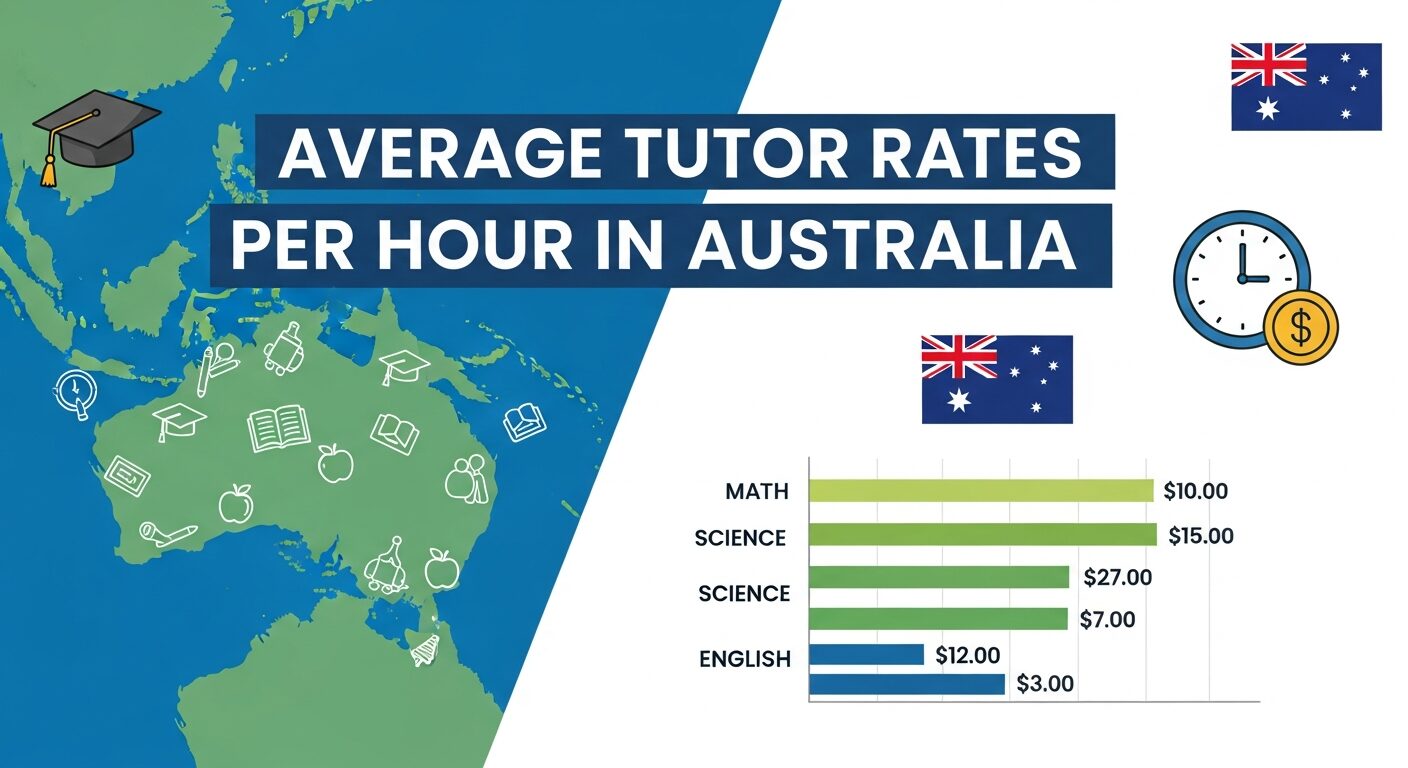
The great news is, you can make an informed decision based on real data and the right tools. The average tutor rate per hour in Australia is about AUD $15 to $120. However, it is simply an estimate, as the final rates will depend on factors such as subject, experience, and location.
Meanwhile, qualified teachers and exam coaches often charge $80–$180/hr for personalized, high-impact tutoring that delivers strong academic results.
What is the pricing that you should set for your services? Well, we will answer this question and help you understand how to set your pricing based on average tutoring rates per hour in Australia.
Average Tutor Rates in Australia
There is no single rate per hour in Australia. Different tutors will charge different prices across the country:
- Typical range: $50–$120/hr
- Online sessions: $40–$90/hr (no travel, wider reach)
- In-person sessions: $70–$120/hr (includes travel/prep time)
How do Different Types of Tutors Charge for Tutor Hours?
Considering that tutoring is not one-size-fits-all, so is the pricing. The tutor’s hourly rate often depends on the type of tutoring you offer. Understanding how different types of tutors charge can help you set fair, competitive rates while still growing your tutoring business sustainably.
Here is how different tutors set their tutor hourly rate:
| Tutor Type | Experience Level | Average Hourly Rate (AUD) | Best Suited For |
| Student Tutor | Beginner | $25–$50/hr | Homework help, younger students |
| Experienced Tutor | Intermediate | $50–$90/hr | High school or specialised subjects |
| Qualified Teacher | Advanced | $80–$180/hr | HSC, VCE, IB, entrance exams |
| Agency Tutor | Varies | $30–$50/hr (take-home) | Assigned clients through agencies |
Average Tutoring Rates in Australia by Location: City vs Regional Differences
The average tutor rate per hour in Australia is largely dependent on location. Cities like Sydney, Brisbane, and Melbourne often have higher tutor hourly rates due to increased living costs and demand, while regional areas usually offer more affordable options.
Here are the city/region-wise tutoring rates per hour in Australia:
| City/Region | Average Hourly Rate (AUD) |
| Sydney | $20–$150/hr |
| Melbourne | $40–$140/hr |
| Brisbane | $30–$120/hr |
| Perth | $40–$110/hr |
| Adelaide | $22–$100/hr |
| Regional Areas | $40–$90/hr |
Average Tutor Rates Per Hour in Australia: Subject-Based Price Range
The average high school tutoring or online tutoring rate will depend heavily on the subject a tutor teaches. Core academic subjects like English and Maths usually have moderate rates, while specialized areas such as STEM, test prep, or music often command higher prices.
| Subject | Average Rate (AUD/hr) | Reason |
| Maths & Science | $70–$150 | High demand, complex content |
| English | $60–$120 | Strong ongoing demand |
| Economics & Business | $70–$130 | Exam-focused, analytical |
| Languages | $60–$120 | Bilingual niche expertise |
| HSC/VCE/IB Prep | $100–$180 | Specialised high-impact tutoring |
Online Vs. In-Person Tutoring: Do Tutoring Rates Change?
Yes, the mode of tutoring can play a significant role in determining the average tutor rates per hour in Australia. Each format has its own advantages, challenges, and cost implications that directly affect what tutors charge.
Online Tutoring
Typically, online tutoring is much more affordable for students and quite flexible for tutors. As there is no commute, the time and the cost are saved. Hence, tutors can conduct more sessions a day.
Many tutors use tutor management and tutor scheduling software to streamline bookings, lesson tracking, and payments, making it easier to grow their tutoring businesses efficiently.
Considering all the facts, the average tutor rate in Australia is about AUD $30–$60 per hour. This is also subject to the subject and the tutor’s experience and qualification level.
In-Person Tutoring
Due to travel expenses, setup time, and the added personal touch, in-person tutoring more often than not commands a higher tutor hourly rate.
Parents and students are often willing to pay more for the in-person experience, especially for younger students or those preparing for high-stakes exams.
Hence, the average high school or in-person tutoring rate can range from AUD $50 to $100 per hour, depending on location and expertise.
The decision will completely depend on what the tutor is comfortable with. Using the right learning management software can help you create engaging lesson plans, track student progress, and balance both online and offline sessions effectively.
What Determines Your Tutor’s Hourly Rate?
The average tutoring rate per hour you set in Australia reflects your value, not just the time you invest. Some factors that determine the tutor’s hourly rates that you can set are:
- The qualification matters a lot. The hourly rates will vary depending on whether you are a certified teacher or a subject expert.
- The years of experience that you have accumulated also matter. Experienced tutors can charge more than those just starting.
- Advanced or exam-level topics command higher rates.
- One-on-one sessions cost more than group tutoring.
- Independent tutors keep more of what they earn and can therefore price their services accordingly.
- Consistent, long-term clients justify stable, higher rates.
How to Set Your Own Tutoring Rate (Step-by-Step)
Setting the average tutoring rates per hour in Australia can feel confusing, but it is one of the most necessary steps in building a tutoring business. It is important to balance your experience, subject expertise, as well as the local demand while staying competitive.
Here is how you can set your tutor’s hourly rates:
Step 1: Check what similar tutors charge in your area.
Step 2: Focus on subjects where you excel or have certifications.
Step 3: Create a personalized learning plan, as structured sessions can help you get better rates.
Step 4: Offering bundles and flexible packages will help you get better prices.
Step 5: Save time and workforce by automating invoicing, reminders, and reports via tutor management software.
Step 6: Once your calendar fills up, raise your rate for new clients.
Pro tip: Use different software to help you spend less time on administrative tasks and focus more on tutoring. It will significantly help expand your tutoring business.
Conclusion
Suppose you are looking to establish a tutoring business in Australia or are looking to earn a quick buck by offering your tutoring services. In that case, you can turn your expertise into a thriving business. Understanding average tutor rates per hour in Australia, along with factors such as location, subject, and format, helps you set fair and competitive prices.
Whether you select online tutoring or in-person tutoring, setting the right approach, right pricing, and using the right tutor scheduling software can streamline your operations, help you create engaging lesson plans, and ultimately expand your tutoring business for long-term success.
FAQs About Average Tutor Rates in Australia
How much do high school tutors charge per hour in Australia?
High school tutors usually charge between AUD $40 and $80 per hour. The rate varies by subject, especially for advanced subjects like Chemistry, Physics, and Mathematics Methods, which require greater expertise.
Are online tutoring rates cheaper than in-person tutoring?
Yes, online tutoring rates are generally 10–20% lower than in-person tutoring. This is because online tutors save on travel time and expenses while serving a broader student base through virtual platforms.
How do tutors decide what to charge when starting?
New tutors typically start at the lower end of the scale, around AUD $25–$40 per hour, to build experience and client testimonials. Over time, as they develop expertise and positive reviews, they can raise their rates.
What’s the best way to set competitive tutoring rates?
Research local averages, assess your qualifications, and test different pricing tiers. You can also look at competitor profiles on platforms like Tutor Finder or Superprof to gauge the market.