

Introduction
The modern tutoring market is no longer limited to your neighborhood. It is defined by your network speed, your curriculum quality and most critically, your operational efficiency.
For decades, the “tutoring business” model was simple: find a local student, match them with a local teacher and exchange cash or checks at the end of the month. But the last few years have shattered that limitation. Today, a math whiz in Bangalore can mentor a struggling calculus student in Boston. A creative writing coach in London can inspire a classroom of poets in Sydney. Geographical barriers have vanished, opening up a massive “cost arbitrage” opportunity to deliver high-quality education globally at competitive rates.
But as the walls of geography came down, a new, more formidable wall went up: The Wall of Administration.
Running a local tutoring center with 50 students is hard. Running a global, cross-border academy with 500+ students, multiple time zones, international payments and a distributed workforce is exponentially harder. It is a logistical minefield where a single missed link, a forgotten invoice, or a scheduling mix-up can shatter trust instantly.
This is the story of KidWay, a forward-thinking educational company that faced this exact wall. It is the story of how they moved from a “Franken-stack” of disconnected spreadsheets and WhatsApp chats to a streamlined, automated operation. And it is a blueprint for any tutoring business looking to scale from a local service to a global brand without hiring an army of admin staff.
The Vision: Creating Self-Learners for Life
To understand the operational challenge, you first have to understand the product. KidWay isn’t just another “homework help” agency.
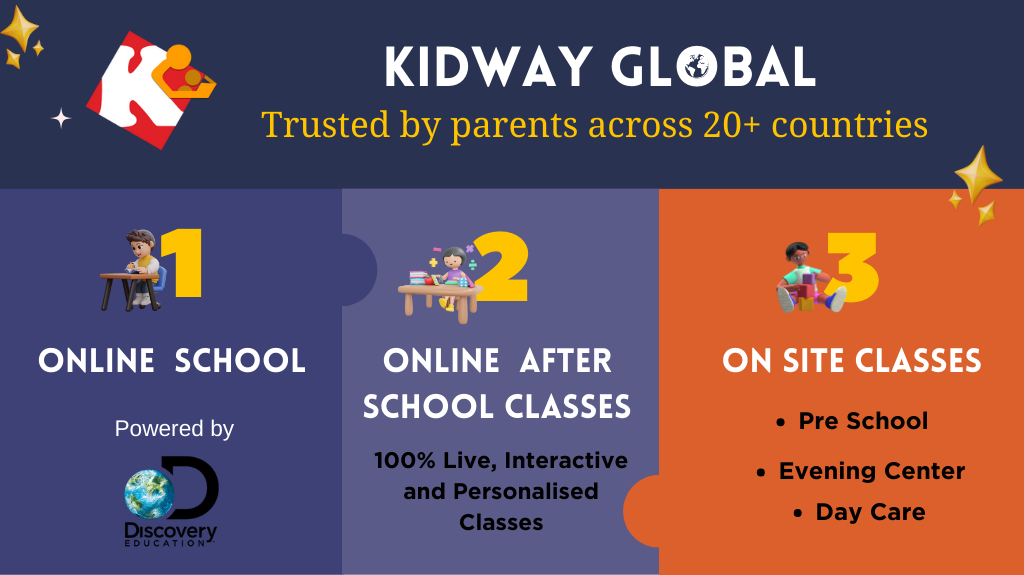
Founded by Sunny Jaiswal, KidWay is built on a philosophy that goes beyond rote memorization. With over 30 years of experience in psychology-based education techniques, the company focuses on five core pillars: Maths, English, Logical Reasoning, Creative Thinking and Brain Power.
“We provide LIVE 1:1 classes for kids in the age group of 3 to 14 years old,” explains Sunny. “Our classes focus on developing not just core academic skills, but also on cognitive skills development and creating self-learners for life.”
This “high-touch” model is their competitive advantage. KidWay specifically caters to “edge case” students – children who are either exceptionally gifted and bored by standard curriculums or those who are struggling and need a different psychological approach.
“Most curriculums are not developed for these students,” Sunny notes. “They need a teaching method that adapts to them.”
This bespoke approach meant that standard, “cookie-cutter” operational processes wouldn’t work. Each child had a unique path, which made tracking progress manually a logistical nightmare.
During the COVID-19 pandemic, KidWay pivoted. Like many tutoring businesses, their in-person tutoring operations struggled during lockdowns. But they saw the silver lining: the forced digital transformation allowed them to launch their services online, worldwide. Suddenly, their potential market wasn’t just their city; it was the world.
But as they opened their doors to the world, the world flooded in. And with it came chaos.
The Challenge: Hitting the “Spreadsheet Ceiling”
Every growing service business eventually hits what we call the “Spreadsheet Ceiling.” It’s that moment where the manual processes that worked for 50 clients completely collapse under the weight of 500.
For KidWay, this ceiling was made of disconnected tools.
“We didn’t have one place to view everything together,” Sunny recalls. “Our daily classes, their reporting, communication with parents and payments were all different entities and didn’t talk to each other automatically.”
The “Franken-Stack” Reality
KidWay was running on what we often call a “Franken-stack”, a monster stitched together from various free or low-cost tools that were never designed to work together.
- Tutor Scheduling: Handled via calendar invites or manual messages.
- Communication: WhatsApp or email threads.
- Classes: Zoom or Google Meet links generated one by one.
- Tracking: Excel sheets to log who took a class and who owed money.
- Payments: Separate payment gateways or bank transfers.
In this environment, data doesn’t flow; it has to be carried. A staff member has to look at a payment notification, open a spreadsheet, mark a cell as “paid,” then open an email, send a confirmation to the parent, then open a calendar, and schedule the sessions.
The “Human Interface” problem
When software doesn’t talk to software, humans have to bridge the gap. KidWay had dedicated staff members whose entire job was to act as the “API” between these disconnected systems.
“We had people interfacing these modules and ensuring seamlessness across them,” says Sunny. “But, as all of this was done humanly, there were human errors as well. Also, it took time to fix the gaps in the process.”
This manual approach created three critical risks:
1. The Silent Killer: Revenue leakage
With 500+ active students taking multiple classes a month, tracking every dollar is impossible on a spreadsheet. “We had obvious leakages in revenue,” Sunny admits. If a student missed a class, was it billable? If a teacher rescheduled, was the credit deducted? In the chaos of manual tracking, credits were often lost and sessions went unpaid.
These same revenue leakage issues affected STEM Prep, a STEM-focused tutroing agency based out of Maryland, USA that eliminated disputes with Wise’s interlinked and automated invoicing and session tracking.
2. The Rescheduling Trap
“Difficulties in rescheduling classes” was a constant refrain. In a rigid school system, rescheduling is rare. In 1:1 specialized international tutoring, it’s daily life. A sick child, a traveling parent, a timezone mix-up. Handling these changes via WhatsApp/Email meant constant back-and-forth. “Can we do Tuesday?” “No, Tuesday is EST, I’m in IST.” A single rescheduled class could generate 10 emails and often still result in a no-show.
3. Burnout
Talented staff were wasting hours on copy-paste data entry instead of supporting students and parents, leading to higher risks of occupational burnout.
The Specific pain of Cross-Border operations
For a business like KidWay, with specialized tutors in India serving students primarily in the USA, the stakes are even higher.
The Trust Gap
When a parent in New York hires a tutor in Bangalore, they are taking a leap of faith. They can’t walk into a physical center to complain. They can’t see the facility. Their only window into the business is digital.
One major friction point was communication. Parents would receive messages from admins about billing and separate messages from teachers about homework, often on personal WhatsApp numbers. “There was a need to separate admin and teacher communication,” Sunny noted during their evaluation. “We needed to avoid confusion for parents.”
In a manual system, providing transparency is a full-time job. You have to manually write emails detailing what was covered in class, how many credits are left and when the next payment is due. If you fall behind, the parent feels left in the dark.
The Credit Management nightmare
Perhaps the biggest headache for live tutoring businesses is Credit Management.
Unlike a Netflix subscription, where you pay a flat fee for unlimited access, live tutoring often works on a “credits” system. A parent buys a pack of 10 classes.
- If the kid attends, 1 credit is deducted.
- If the kid is sick and cancels 24 hours in advance, no credit is deducted.
- If the kid is a “no-show,” the credit might still be deducted (depending on policy).
- If the tutor cancels, the credit is returned.
Managing this logic on an Excel sheet for hundreds of students is a recipe for disaster. “Credits management has been automated,” Sunny says, identifying it as a key win. But before automation, this was a source of constant friction. A parent might claim they have 4 classes left, while the spreadsheet says 2. Who is right? Without a unified system of record, these disputes can cost you a client.
The Solution: Why generic tools failed and a specialized tutoring software worked
KidWay knew they needed a change. They looked at the market for “Tutoring Software.” The problem? Most software is too generic.
A standard CRM (like Salesforce or HubSpot) is great for sales, but it doesn’t understand “class credits” or “recurring Zoom links.” A standard LMS (like Canvas or Moodle) is great for hosting courses, but it fails at the complex scheduling and billing logic of 1:1 private tutoring.
KidWay needed a specialized software for the business of tutoring. They found Wise.
“I see Wise as very close to our use case,” Sunny says. “So, it is almost perfect for us.”
The Feature: Automated Credit logic
The breakthrough for KidWay wasn’t just “booking” software; it was the intelligent credit ledger. With Wise, the logic is baked in. When a student attends a session, the system automatically deducts the credit. If a class is cancelled within the allowed window, the credit is preserved. “Class credits system & flexibility in deducting credits based on the outcome of class” was one of the specific features Sunny highlighted as a game-changer. This removed the “human interface.” No one had to update a spreadsheet, the system was the source of truth.
The Feature: The “Productized” experience
To compete globally, KidWay needed to look like a tech company, not just a service provider. Wise gave them a white-labeled mobile app and desktop portal. “What specific features made it a suitable choice? Mobile app & desktop available, chat features…” Sunny lists. This transformed the parent experience. Instead of digging through WhatsApp statuses or email threads to find a Zoom link, parents could open the KidWay app. They could see:
- Upcoming classes (in their local time zone).
- Class history.
- Teacher feedback.
- Remaining credits.
This “One-View” history was critical. “We didn’t have 1 place to view everything together,” Sunny admitted about the old days. Now, the app was the view.
The Transition: Overcoming Inertia
Moving from a “Franken-stack” to a unified OS isn’t easy. It requires behavior change. “There were some initial hiccups as it was a completely different way of working for our internal team,” Sunny acknowledges honestly. “There was a lot of inertia & resistance to move to a new way of working… not just from our team’s perspective but also from some parents as well.”
This is a universal truth in B2B updates: The hardest part of software adoption is people. Staff who were used to their specific Excel templates felt like they were losing control. Parents who were used to just texting a teacher now had to log in to an app. But KidWay pushed through. “The Wise team was very supportive during the transition phase,” says Sunny. By sticking to the implementation, they moved past the friction to the other side: Efficiency.
Results: Automating for confidence
So, what happens when you replace manual chaos with automated order? For KidWay, the result wasn’t just “saved time”; it was confidence.
“It is still early for us to evaluate the time saved,” Sunny says pragmatically, “but the process is error-free now and we are more confident in the overall metrics.”
1. Error-Free Operations
“Unique class links creation has been automated. Attendance marking has been automated,” Sunny reports. This sounds simple, but the downstream effects are massive.
- No more incorrect links: Students don’t sit in empty Zoom rooms waiting for a teacher.
- No more billing disputes: Attendance is marked in real-time, so invoices are always accurate.
- No more “Did they show up?” questions: The data is right there on the dashboard.
2. Enhanced Student engagement
“The platform provides convenient tracking for all the past classes,” says Sunny. “So, there is no confusion on the number of classes the student has attended or missed in the month.” This transparency keeps students engaged. They can see their own progress. Parents can see value for money. “Parents like the full visibility and transparency,” Sunny notes.
3. Scalability
With the admin tasks automated, KidWay can now focus on what they do best: Teaching. The “backend services” are now managed by Wise. This means KidWay can add 50 more students next month without needing to hire 5 more admin managers to update spreadsheets. They have broken the linear relationship between revenue growth and overhead bloat.
Conclusion: The Playbook for global tutoring businesses
KidWay’s journey from a manual, local operation to a tech-enabled global brand offers a clear playbook for other tutoring businesses.
- Don’t wait to Centralize: The “Spreadsheet Ceiling” hits faster than you think. Moving earlier saves you the pain of migrating messy data later.
- Look for “Purpose-Built” Tools: Generic tools leave gaps that humans have to fill. Look for software that understands the specific nuances of tutoring, like credit management and recurring schedules.
- Expect Resistance, but push through: Your team will hate the change at first. That’s normal. As Sunny advises: “Transitioning to a new tool is a challenging process… take your time to evaluate the tool based on your specific needs.”
- Transparency is your product: If you are selling a service across borders, trust is your currency. Use software that gives your clients a window into their progress.
In the end, automation isn’t about replacing humans. It’s about letting humans be humans. By handing the “boring stuff”: the credits, the links, the attendance over to Wise, KidWay empowered their educators to focus on their true mission: developing the brain power of the next generation.
“What you see is what you get,” Sunny says of his experience with Wise. “There are no surprises, which is what we loved the most.”
In the volatile world of international tutoring business, “no surprises” is the ultimate competitive advantage.
Ready to scale your academic tutoring operations with confidence?
Join tutoring businesses like KidWay using Wise to manage 1-on-1 sessions at scale. Book a free demo with Wise
Frequently Asked Questions (FAQ)
Q: How do I scale my online tutoring business globally?
Scaling a tutoring business requires moving beyond manual spreadsheets to a centralized tutoring management software. By automating administrative tasks like scheduling, recurring billing, and credit management, you can grow your student base without proportionally increasing your admin staff.
Q: What is the best software for managing international tutors?
Top-tier software for international tutoring should handle multi-timezone scheduling, automated currency conversions, and streamlined communication. Tools like Wise are purpose-built to manage disparate tutor availability and ensuring students in different countries see class times in their local zone.
Q: How to automate student attendance and billing?
To prevent revenue leakage, use a system that links class attendance directly to your billing ledger. Automated platforms detect when a student joins a session and deducts credits immediately, triggering low-balance alerts to parents without manual intervention.
Q: Why is a “white-label” tutoring software or Mobile App important for tutoring businesses?
A white-label or a branded app builds trust by presenting a professional, branded interface to parents. It signals that you are an established institution, not just a freelance operation, which is critical when charging premium rates in competitive global markets.