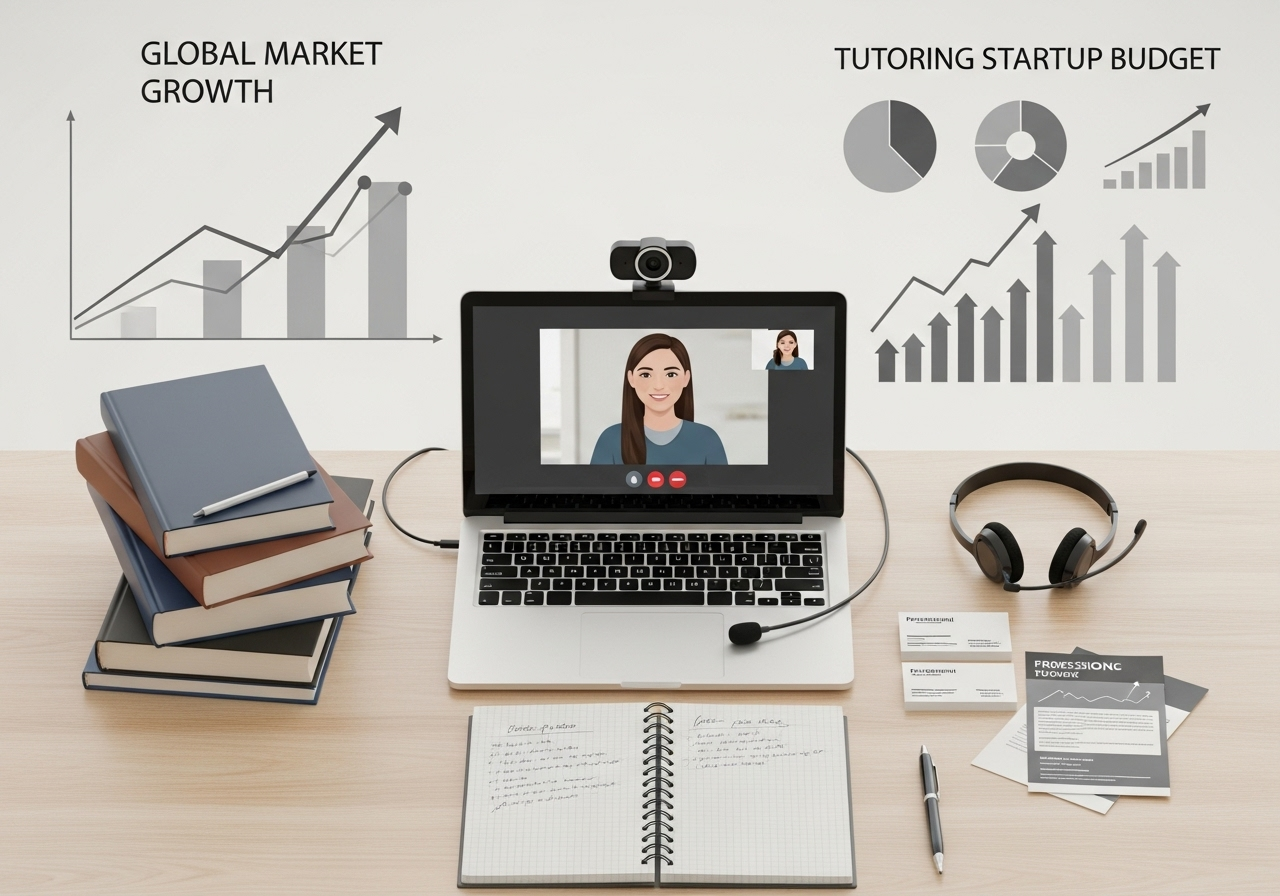
Are you thinking about starting a tutoring business and wondering if it is a smart decision? The answer is yes, it is. The global market is expected to reach a staggering $218.304 billion by 2033. So, yes, it is the right time to get started with planning. While there are significant growth opportunities, the first question that might have come to your mind is what the startup costs for a tutoring business are.
Unlike retail outlets or other business ventures, starting a tutoring business can be comparatively less expensive. Since you can start with a laptop, a reliable internet connection, and a robust strategy, the start-up expenses are quite low. The overall cost will eventually vary depending on whether you will provide tutoring online from home, visiting a student’s house, or opening a learning center.
In this article, we will break down the tutoring startup budget and how you can save up without compromising the quality.
Why Is It Necessary to Understand the Startup Costs?
Any business without a financial plan can quickly go downhill, and the same is true for a tutoring venture. It can further lead to burnout and stress to keep the business afloat. When you understand the tutoring startup budget, it will help you to:
- Set realistic pricing for your services.
- Avoid unexpected financial roadblocks.
- Plan for both one-time and recurring expenses.
- Decide whether to start lean from home or invest in a physical center.
Expected Startup Cost for A Tutoring Business
When you begin planning to start a tutoring business, one of the key elements will be the initial expenses for the tutoring business. These costs are broadly categorized into two types. Let us look at both types of operational costs for a tutoring business.
1. One-Time Startup Costs
These types of costs are paid only in the initial stage of setting up your tutoring business.
Business Registration and Legal Setup
You will need money for registering the business, whether it is a sole proprietorship or a tutoring company. Depending on your state and business structure, it can range from $50 to $520.
Equipment
In case you are looking to start an online tutoring business, you may have to invest in expenses such as a laptop, headset, webcam, and, more importantly, reliable internet. You can expect to spend between $2,000 and $3,000 on different equipment.
Marketing
Having an online presence today is of high importance, as students or parents will look for a credible tutor online in most cases. There are numerous tutors out there, and hence it is necessary to be visible.
You can either start with Google Ads or Facebook Ads, or even begin with having a simple website. With that, you can print flyers and business cards to get more students. This can cost you about $1000 to $1200.
Insurance
Getting liability insurance is optional, but it can prove to be a wise investment for tutors providing in-person tutoring or tutors who teach minors. It will protect against property damage and will also be helpful if you are dealing with sensitive student information.
Also, it can come across as a sign of professionalism to parents and students.
Furniture and Classroom Setup
These are small costs and are not significant, but they can add up to a big amount real quick, whether it is in-person tutoring or you are going to open a center.
You will have to get chairs, desks, whiteboards, stationery, printers, books, and study material. Hence, it is also necessary to consider whether you are thinking about tutoring centers or home-based tutoring business costs.
These initial expenses for the tutoring business act as your entry ticket into the tutoring world.
2. Recurring Costs
It is necessary to understand that your tutoring startup budget will also have recurring costs, mostly every month. Here are some of the recurring expenses for a tutoring business:
Rent
This aspect is only applicable if you are looking to open a tutoring center. Even if you have the funds to buy a property, it is best to take a place on rent for your tutoring business. The rent will depend on your location, size, and availability.
Business Software
Consider tutor management software or Learning Management Software to help you with teaching as well as operational requirements like scheduling and setting up payment options.
Marketing Spend
Even if you have a website in your name, you have to pay for running ads or boosting posts to improve your visibility. If you have a Google Business profile, then you have to pay a fee to remain active each month.
Insurance Premium
Premiums are paid to keep the insurance active. Most insurance companies have monthly premium payments, and hence, it is recurring in nature.
Transportation Cost
For tutors who are providing in-person tutoring to students by visiting their home or meeting at a library, the transportation cost will also be a recurring cost that must be included in your tutoring startup budget.
Payroll and Staff Salaries
Once your business picks up, you might have to hire staff members for various purposes. You will have to pay them salaries each month. However, this phase will come at a later stage.
Expected Cost Breakdown by Business Model
There is no fixed cost of starting a tutoring business. The costs of an online tutoring business will differ considerably from home-based tutoring business costs.
1. Home-Based Tutoring Business Costs (Online)
You can expect the below-mentioned costs:
- Business registration and licenses: $100–$500
- Laptop & headset: $300–$1,200
- Website + domain: $50–$250
- Software tools: $30–$120/month
- Insurance: $10–$40/month
- Marketing: $100–$300
2. In-Home Tutoring Costs
You can expect the below-mentioned costs:
- Transportation: $60–$200/month
- Portable teaching kit: $50–$200
3. Tutoring Learning Center Costs
You can expect the below-mentioned costs:
- Lease deposit and rent: $1,500–$4,000+, depending on city size
- Furniture and classroom setup: $3,000–$10,000
- Utilities and internet setup: $200–$600
- Professional branding and signage: $500–$2,500
- Hiring tutors: $150–$600 per person
- Marketing: $500–$2,000
How to Keep the Tutoring Budget to the Minimum
Since the costs are variable, you can take steps to ensure that you don’t go over the budget. Here are some suggestions:
- Begin with Zoom or Google Meet, then upgrade once you have a steady cash flow.
- Use affordable platforms like WordPress, Wix, or Squarespace instead of hiring expensive designers.
- Opt for word-of-mouth and parent testimonials, as they are less expensive and work better than paid ads.
- For advertising, start with $5–10/day campaigns before committing big amounts.
- If you are setting up a tutoring center, you can also opt to buy second-hand furniture or equipment.
- Get tutor scheduling software that can offer several services under one platform, such as scheduling, invoicing, and communication.
Conclusion
Starting a tutoring business does not imply that you need to put every penny into it. It is a venture where your passion, strategy, and skills have more weightage. Whether you want to start with a home-based tutoring business or planning to launch a learning center, it is necessary to know the start-up costs for a tutoring business so that you do not get surprises. It will also help you to make confident decisions further in the business. It is necessary to strike a balance between spending on essentials and cutting unnecessary costs.
FAQs
What are some of the initial expenses that can be expected for a tutoring business?
The main initial expenses include business registration, teaching equipment (laptop, headset), website setup, learning materials, insurance, and marketing. For learning centers, rent and furnishings add to the upfront cost.
Do I mandatorily need a license to start a tutoring business?
Licensing requirements vary by region. Some areas only require basic business registration, while others may need educational certifications, background checks, or permits if you’re running a physical center.
Can I run a tutoring business part-time?
Yes. Many tutors start part-time while holding another job. Since costs are flexible, you can scale your hours and expenses gradually.
How can I fund my tutoring startup costs?
Options include personal savings, microloans, local business grants, or prepaid student packages (parents pay for multiple sessions upfront).