Every tutoring business has the same foundational problem: you can be an excellent educator and still have an empty schedule. Teaching ability and visibility are two distinct skills, and most tutors are trained in only one. Without a clear and consistent strategy to attract new students, even the most qualified tutor will find themselves relying on word of mouth, which does not scale, and referrals that arrive unpredictably.
According to the 2025 National Assessment of Educational Progress in the USA, only 22% of high school seniors are proficient in math, and reading scores are at their lowest since 1992. At the same time, online tutoring now accounts for over 55% of total tutoring usage, indicating that more students are actively seeking flexible academic support.
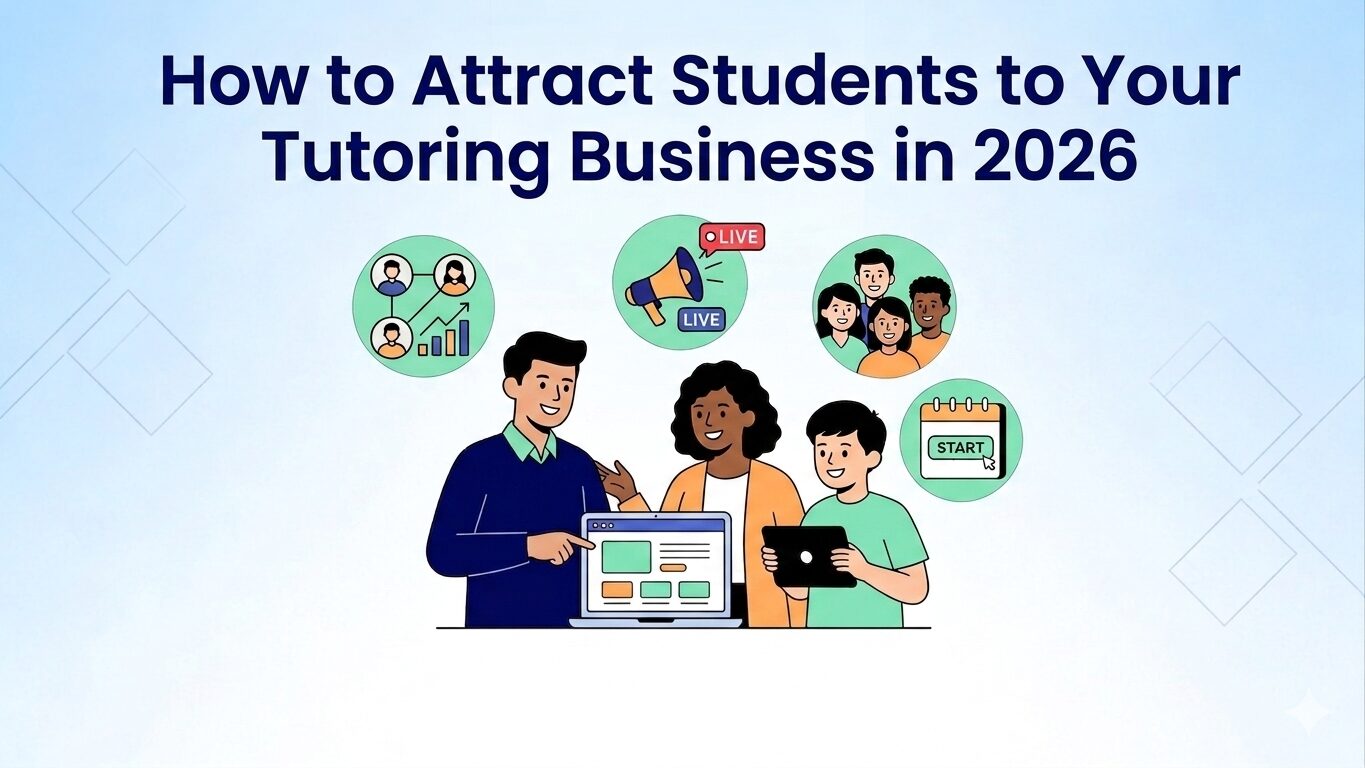
This guide covers every proven strategy for how to attract students to your tutoring business in 2026, from understanding the buyer behind every enrollment decision to the specific digital, referral, and community tactics that generate a consistent pipeline of new students. Whether you teach one-on-one online sessions or run group classes, these strategies are built around what actually works in the current market.
Understand Who You Are Actually Trying to Attract
Before any strategy works, you need to know the buyer. Most tutoring decisions are not made by the student. They are made by a parent who is worried, time-pressured, and comparing you with several options. Strategies that attract students quickly are built around how that parent thinks and what data drives their behavior.
The Parent Decision Framework
- Scheduling flexibility comes first for busy parents managing school, work, and activities
- Parents want proof of results, not just teaching
- Trust is built before the first session through reviews, credentials, and profiles
The Academic Crisis Creating Demand
- Only 22% of US high school seniors are good at math (2025 NAEP)
- Around 45% struggle with basic math concepts
- ~40% students fail Algebra 1 and need to retake it
- 2/3 students are not ready for college-level math and reading
Top 10 Ways to Attract Students to Your Tutoring Business
Now that you understand your target audience, let’s understand the top 10 strategies to attract students to your tutoring business:
1. Specialize in a High-Demand Subject or Niche
General tutors compete on price, but specialists earn more by showing expertise. According to Dataintelo (2025), the STEM tutoring market is growing rapidly, with math accounting for 34.2% of demand. According to Bookeo (2026), general tutors earn around $23/hour, while specialists can earn $38/hour or more in high-demand subjects.
High-demand niches like Algebra 1, SAT prep, and coding attract more students because parents see clear value in them. Using SAT tutoring software helps track progress and improve results, making your service more premium.
Below is a quick comparison of popular tutoring niches and their demand levels:
| Subject or Niche | Avg. Hourly Rate (Online) | Demand Level | Growth Signal |
| General Academic (K-12) | $23–$35 | High volume, low margin | Stable |
| Algebra 1 Recovery | $35–$55 | Very high | ~40% students fail |
| SAT / ACT Preparation | $50–$75 | High | Digital SAT demand |
| STEM (Coding, Physics) | $50–$75 | Fastest growing | 14.7% CAGR |
| Organic Chemistry | $60–$90 | High | Pre-med bottleneck |
| AI and Coding Basics | $55–$80 | Emerging | Future skill demand |
2. Optimize for Local Search and Your Google Business Profile
Most parents search online before choosing a tutor. According to Semrush (USA, April 2026), keywords like “tutoring near me” and “math tutors near me” have very high intent, indicating these users are actively searching and ready to take action. To rank here, having a proper Google Business Profile (GBP) is important, especially for tutors with a physical tuition center, as it builds trust and improves local visibility.
High-intent keywords bring faster results. Using SIS tutoring software with local SEO helps manage leads, track inquiries, and support growing your tutoring business efficiently.
Below is a quick view of important keywords and their intent (as per Semrush April 2026 data):
| Keyword | Monthly Searches (USA) | Global Search Volume | Intent Level | Conversion Potential |
| Tutoring near me | 18,100 | 33,300 | Very high | Immediate inquiry |
| Math tutors near me | 9,900 | 19,100 | High | Strong conversion |
| Organic chemistry tutor | 14,800 | 25,900 | High | Niche demand |
| SAT tutoring | 4,400 | 6,300 | High | Exam-focused |
For a complete breakdown of organic growth strategies specific to tutoring businesses, the guide on how to grow your tutoring business covers both SEO and non-digital acquisition channels.
3. Build a Structured Two-Sided Referral Program
Word of mouth is the most trusted form of marketing for a tutoring business because it comes from parents who are already trusted by others. The main problem is that most tutors leave referrals to chance instead of structuring them. According to Tutorbase research, one tutoring business generated 1,715 referred leads in 10 months, with an over 50% conversion rate, compared to just 5%–10% from cold leads, demonstrating the power of structured referrals.
A two-sided incentive works best, where both parents benefit. For example, offering $50 to each side costs $100 but can return $500–$1,000 in value. Promote it effectively and explore additional ways to attract tutoring clients.
4. Use Your Results as Your Primary Marketing Asset
In 2026, parents care about results, not promises. According to the National Bureau of Economic Research, high-dosage tutoring improves outcomes by 0.37 standard deviations, moving a student from the 50th percentile to the 66th percentile in one academic cycle. It is also 20x more effective for math and 15x more effective for reading than standard tutoring models, making results your strongest selling point.
Instead of showing research, share real student progress. Track scores, send monthly reports, and highlight improvements. This builds trust and turns parents into your referral source
.
5. Build a Community Partner Network
The most reliable referrals often come from professionals, not parents. School counselors, psychologists, pediatricians, and coaches regularly interact with families who need academic help. A network of 10–15 trusted local partners can generate a consistent stream of high-quality referrals without spending on ads, making it a strong long-term growth strategy.
Focus on value-first partnerships by offering workshops or sessions. Build relationships that continue generating referrals over time. For strategic guidance on how to grow and systematize a tutoring business across multiple channels simultaneously, the scaling your tutoring business guide covers the operational frameworks that connect these efforts.
6. Offer a Diagnostic Trial Session, Not a Free Class
A free class feels like a giveaway, but a diagnostic session feels like a professional service. When you position it as an assessment to identify gaps and create a clear 4–6 week plan, parents see real value. This approach not only shows your expertise but also increases conversion because parents understand exactly what they are paying for.
Provide a short written plan after the session and improve early retention by outlining how to motivate students in the classroom.
7. Create Content That Demonstrates Your Expertise
Content is not about going viral but about building trust. Blogs, short videos, and study tips help parents understand your teaching style before they contact you. According to Microsoft (2025), 86% of education organizations use AI, so addressing this topic helps you stay relevant and build trust with modern parents.
Show how you explain concepts clearly and guide students.
8. Get Certified and Make It Visible
With over 2 million tutors in the US, certification helps you stand out and build trust quickly. Recognized certifications signal professionalism, background verification, and better teaching methods. Many schools and professionals prefer referring certified tutors, which increases your chances of getting high-quality leads.
Display your credentials clearly across platforms and follow best practices from the how to become a private tutor guide.
9. Use WhatsApp and Automated Follow-Up to Convert Leads Faster
Most tutoring businesses lose leads due to slow responses. When a parent inquires and does not get a quick reply, they often choose another tutor. Fast response time is one of the biggest factors in conversion, and automation helps remove delays.
Use WhatsApp for faster communication and automate follow-ups. Set it up using WhatsApp automation to grow tutoring business conversions.
10. Retain Students Professionally to Generate Ongoing Word of Mouth
Getting a new student is more expensive than keeping one. Long-term growth depends on retention, where satisfied parents continue and refer others. Structured communication, progress tracking, and regular updates improve both retention and referrals significantly.
Use CRM systems to manage communication and improve efficiency. Learn how to manage tutor and student communication to scale effectively.
Grow Your Online Tutoring Business Faster with Wise
Online tutoring now accounts for 55.3% of total market revenue, making it the fastest-growing model, according to Fortune Business Insights. This shift gives you a major advantage because you are not limited by location and can reach more students. With Wise, an advanced online group tutoring platform and LMS for private tutoring, you can attract, manage, and convert students more efficiently while scaling your business with less effort.
With Wise, you can:
- Run group classes to increase revenue without extra effort
- Automate subscriptions and payments for a stable income
- Manage classes, students, and progress in one platform
- Scale your tutoring business without operational stress
Final Thoughts
Attracting students to a tutoring business in 2026 is not a single tactic. It is the compound effect of being findable, credible, and demonstrably effective at the same time. A parent who finds you through a local search, sees a professional profile with visible credentials and a strong review score, and then receives a structured diagnostic session has already experienced three distinct reasons to trust you before they have committed to a single paid session.
The strategies in this guide do not require a large marketing budget or a dedicated team. They require consistency. If you are running an online tutoring business and want to reduce the administrative load that comes with managing sessions, billing, and student communication while you focus on these growth strategies, Wise is built specifically for live online tutors and tutoring businesses that need all of those operational functions in one place.
Frequently Asked Questions
How do I attract students to my tutoring business when I am just starting out?
Start with your network, offer a diagnostic trial session, and connect with school counselors. Set up your Google Business Profile and focus on a single niche to attract students faster and charge higher rates.
What subjects are most in demand for tutoring in 2026?
STEM leads demand, especially math (34.2%) and science (27.8%). Algebra 1 and SAT prep are in high demand, while coding and AI basics are the fastest-growing niches.
How effective are referral programs for attracting tutoring students?
Very effective. Referral leads can convert at over 50%, compared to 5% -10% for cold leads. A simple two-sided reward, such as a discount or a free session, works best.
How important is local SEO for attracting tutoring students?
Very important. Searches like “tutoring near me” bring high-intent leads. An optimized Google Business Profile and local pages help you get more inquiries without ads.
Does online tutoring attract as many students as in-person tutoring?
Yes. Online tutoring now accounts for over 55% of the market and often attracts more students due to its flexibility, though younger students may still prefer in-person sessions.