

TL;DR – 5 Best Practice.do Alternatives in 2026
If you’re looking for Practice.do alternatives, here are five powerful software options to consider
- Wise – An all-in-one tutor management software for tutoring companies, coaching businesses, and EdTechs.
- Paperbell – A coaching-focused tool that bundles scheduling, payments, and contracts in a simple client portal.
- HoneyBook – A clientflow management system for freelancers and service providers, offering contracts, invoices, and workflows.
- Acuity Scheduling – A powerful scheduling tool with payments and reminders, best for tutors and coaches who need solutions just around scheduling.
- TutorBird: Best for small tutoring businesses looking for an all-in-one management tool
Why Coaching and Tutoring Management Software is Essential
Running a coaching or tutoring business is a mix of administration, communication, and client management. Without the right tools, many educators end up spending as much time on logistics as they do on actual instruction.
Here’s why a dedicated management platform is essential:
- Scheduling without chaos: No more endless back-and-forth emails to fix a time; clients book directly into your calendar.
- Seamless payments: Automated invoicing and payment collection reduce awkward conversations and cash flow issues.
- Client/student management: Keep all client details, session notes, and progress in one place instead of scattered spreadsheets.
- Automated reminders: Cut down on no-shows with email/SMS notifications.
- Professional experience: A branded portal or app gives your business credibility and makes you stand out.
- Scalability: As your client/student base grows, managing everything manually becomes impossible — software helps you scale smoothly.
In short, coaching and tutoring management software frees up time for what matters most: teaching and guiding students.
Why People Look for Practice.do Alternatives
“Practice.do worked fine when we were just two coaches. But as soon as we started scaling, it simply couldn’t keep up with our needs. We needed better integrations, more flexible billing, and a platform built for growth.”
Practice.do is a popular client management platform for coaches, tutors, consultants, and small service firms. It provides an all-in-one solution for scheduling, payments, client communication, and even payroll. For solo practitioners and small teams, it’s a handy way to keep operations streamlined.
But as businesses grow or their needs become more complex, many users look for alternatives due to key limitations:
- Steep learning curve: The platform can feel daunting for new users, requiring significant time and training for adoption.
- Limited scalability: Works well for solo coaches, but struggles to support larger teams, multi-coach businesses, or academies that need role-based access and advanced workflows.
- Restricted integrations: Beyond Google Calendar, Stripe, PayPal, and Zapier, it lacks direct integrations with education-first tools, creating workflow fragmentation.
- Basic communication features: Supports chat and voice memos, but lacks interactive tools (e.g., live video, shared content, or collaborative dashboards) that education-focused platforms offer.
- File upload limits: A 100 MB cap makes it difficult for businesses sharing large videos or resources.
- Checkout and billing constraints: Limited flexibility in offering coupon codes, bundled packages, or tiered subscriptions, which are common in coaching and tutoring.
- Manual setup & management: Team permissions, workflows, and configurations require ongoing manual effort.
- Reporting gaps: Analytics for revenue, churn, and student progress are functional but too light for scaling operations.
- Pricing pressures: Costs rise quickly with team size and features, and contractual commitments limit flexibility for growing businesses.
To summarize, Practice is excellent for solo practitioners or small teams. But larger schools, coaching businesses, and businesses needing advanced customization, integrations, or education-focused tools often find themselves outgrowing it.
This is where alternatives to Practice.do come in, platforms that offer more flexibility, stronger integrations, and scalability for growing coaching and tutoring businesses. Let’s look at five of the best options in 2026.
1. Wise: Best Practice.do alternative for medium to large coaching or tutoring businesses
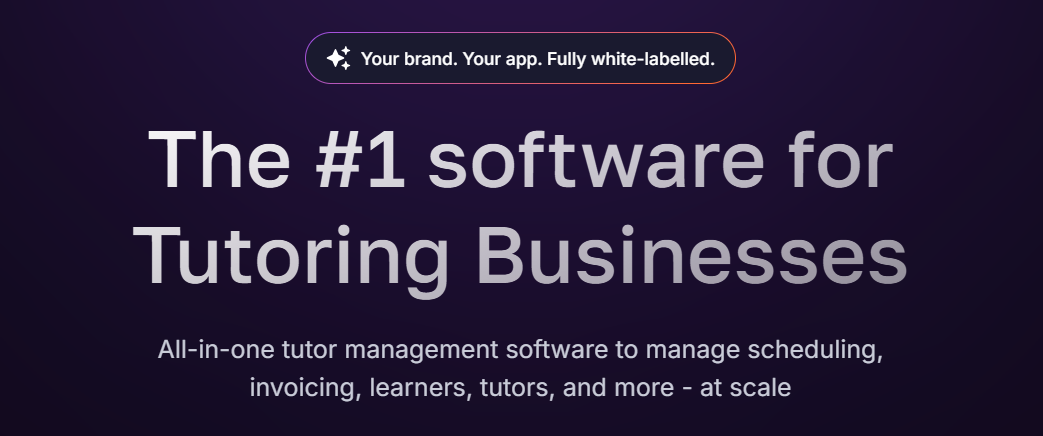
Wise goes beyond client management by combining scheduling, payments, communication, and live class delivery into a single white-labeled platform. Unlike generic coaching tools, Wise is designed specifically for the needs of medium to large tutoring or coaching businesses.
Pros:
- White-labeled web app and branded mobile apps
- Advanced scheduling tools with 2-way google calendar sync
- Deep Zoom integration with session analytics
- Flexible packages, subscriptions, and checkout flows
- Robust reporting on revenue, attendance, and engagement
- Strong support with onboarding and dedicated account managers
Cons:
-
Best suited for medium to large businesses. May be too feature-rich for solo coaches who just need basic scheduling and payments
Pricing: Offers Tutor seat based or session based pricing.
Case Study – ITESKUL
ITESKUL, one of India’s leading foreign language schools, moved to Wise to support its growing student base and multi-teacher operations. With Wise, they consolidated scheduling, live classes, and communication into one platform. Students now book courses online, attend live Zoom-powered classes, and access session history through a branded portal. The ITESKUL team tracks attendance, manages teacher assignments, and uses analytics to monitor student progress and engagement. This shift allowed ITESKUL to scale efficiently without adding administrative overhead.
2. Paperbell: Best for individual coaches and solopreneurs

Paperbell is a business management tool designed mainly for coaches. It simplifies scheduling, client onboarding, contracts, and payments in a single platform. Unlike a full-fledged LMS, it doesn’t focus on classroom features or group sessions, but it works well for solo practitioners who want an easy way to manage clients without juggling multiple tools.
Key Features:
- Simple and user-friendly interface.
- Built-in scheduling and payment processing.
- Lightweight, fast setup for solo professionals.
Cons
- Limited scalability for group or institutional tutoring.
- Few customization options for branding and workflows.
- Lacks advanced reporting and analytics.
- Not ideal for teams > 5
Case Study – Executive Coaching
A leadership coach used Paperbell to sell packages, handle contracts, and schedule sessions all in one place – cutting down on admin time and giving clients a smooth onboarding experience.
3. HoneyBook: Best for creative solopreneurs who want to simplify client management
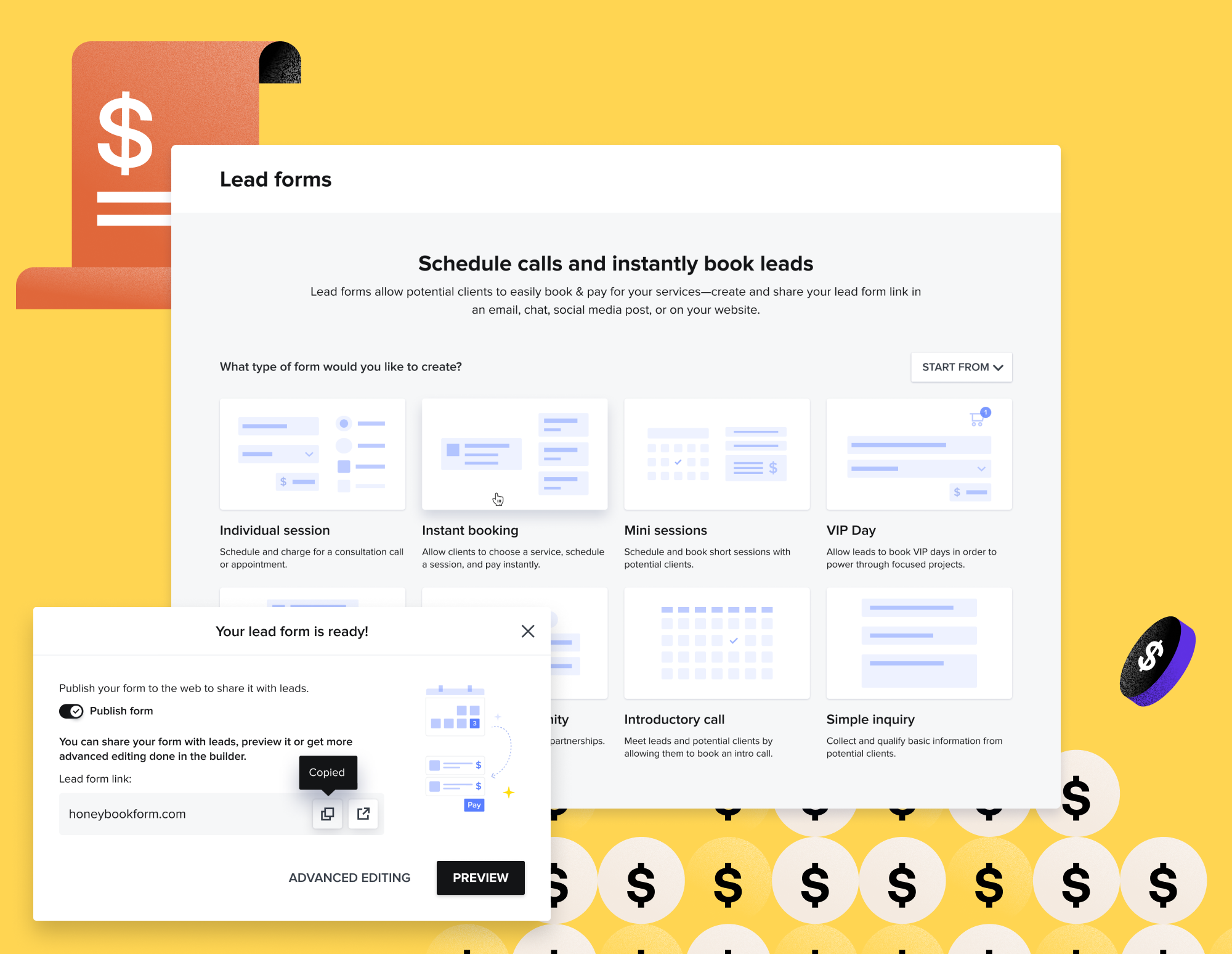
HoneyBook is a clientflow management platform widely used by freelancers and creative professionals. It combines proposals, contracts, scheduling, and invoicing into one system. While powerful for managing clients and streamlining operations, it isn’t built with educators or tutors in mind, which limits its usefulness for academic workflows.
Pros
- All-in-one system for proposals, contracts, scheduling, and invoicing.
- Polished interface with strong automation features.
- Great for managing client communications in one place.
Cons
- Not tailored for tutors or education-specific needs.
- Steeper learning curve for those who only need basic scheduling and billing.
- Higher pricing compared to tutoring-focused tools.
Case Study – Independent Coach
A life coach running a solo practice used HoneyBook to consolidate all client interactions. From proposals and signed agreements to invoicing and follow-ups. This cut down on back-and-forth emails and gave the coach a professional system that impressed clients, freeing up time to focus on coaching sessions rather than admin tasks.
4. Acuity Scheduling: Best for tutors and businesses looking to streamline scheduling

Acuity Scheduling is a robust scheduling tool that helps businesses manage appointments across different time zones and calendars. It integrates with payment processors, offers automated reminders, and supports group bookings, making it a popular choice for tutoring businesses.
Pros
- Powerful scheduling with timezone detection.
- Integrates with Zoom, Google Calendar, and payment gateways.
- Supports group sessions and recurring appointments.
Cons
- Primarily a scheduling tool, lacks LMS features.
- Limited student engagement features (quizzes, progress tracking, etc.).
- Setup can feel overwhelming for new users.
Case Study – Online Language Tutor
A Spanish tutor offering 1-on-1 and group sessions used Acuity to handle bookings across international students. The automated reminders reduced no-shows, while calendar syncing kept their schedule organized without manual effort.
5. TutorBird: Best for small tutoring businesses looking for an all-in-one management tool

TutorBird is designed specifically for tutors and small tutoring businesses. It offers scheduling, invoicing, lesson notes, and basic reporting under one platform. While it’s comprehensive for operational needs, it doesn’t provide advanced learning features like interactive classrooms or progress-tracking dashboards.
Pros
- Tailored for tutoring businesses.
- Includes invoicing, payments, and scheduling in one place.
- Easy to manage student and family records.
Cons
- No built-in live classroom or LMS functionality.
- Limited scalability for larger institutions.
- Interface can feel outdated compared to modern tutoring softwares.
Case Study – Private Math Tutor
A solo math tutor in the U.S. adopted TutorBird to streamline scheduling and automate invoices. The tool saved hours of admin work weekly, allowing the tutor to focus more on lesson prep and teaching rather than chasing payments or managing spreadsheets.
If you are already using Tutorbird, this blog on tutorbird alternatives might be helpful.
Also Read : Top 6 ClassDojo Alternatives for Engaging Classroom Management in 2026
Practice Alternatives at a glance
| Tool | Best For | Key Features | Limitations |
|---|---|---|---|
| Wise | Medium to large tutoring companies and coaching businesses | All-in-one LMS + CRM, white-labeled web & mobile apps, Zoom integration, automated scheduling, payments, communication credits | May feel feature-heavy for solo tutors |
| Paperbell | Coaches & consultants | Scheduling, payments, contracts, client portal | Limited features for group classes or larger tutoring teams |
| HoneyBook | Freelancers & service providers | Clientflow management, contracts, invoicing, workflow automation | Not education-specific; lacks classroom/LMS features |
| Acuity Scheduling | Tutors & coaches needing robust scheduling | Calendar sync, payments, reminders, customizable booking pages | Purely scheduling-focused, no tutoring/learning management |
| TutorBird | Small tutoring businesses | Lesson scheduling, payments, progress tracking, parent communication | Designed for small teams, less scalable for bigger organizations |
How to Choose the Right Practice Alternative
The right platform depends on where you are in your journey. But for most growing coaching and tutoring businesses, Wise is the clear winner.
-
If you’re just starting out as a solo coach or consultant: A lightweight tool like Paperbell might do the job. It’s simple and easy to set up but limited once you need advanced features.
-
If your focus is client contracts and invoices: HoneyBook can be useful, though it’s more of a general business management tool than a learning-focused one.
-
If all you need is scheduling: Acuity Scheduling is strong in that one area, but you’ll still end up stitching together multiple apps.
-
If you’re running a small tutoring setup: Wise covers the basics of scheduling, invoicing, and tracking.
-
If you’re serious about growing your tutoring, coaching, or EdTech business: Wise brings everything into one place: scheduling, payments, live classes, communication, CRM, and even white-labeled apps. It eliminates the patchwork of tools and gives you a platform designed to grow with you.
Conclusion: The best Practice alternative
With the changes around Practice, it’s a natural moment to look at what comes next. While platforms like Paperbell, HoneyBook, Acuity, and TutorBird each bring something useful to the table, they tend to focus on only one part of the journey.
Wise stands out by bringing everything together: scheduling, payments, communication, live classes, and branded apps. So tutors and coaching businesses don’t have to juggle multiple tools.
For most teams, Wise isn’t just a replacement. It’s an upgrade.
Must Check : 5 Best Teachworks Alternatives in 2026: Features, Pricing & Comparison
FAQs
1. Why is everyone looking for alternatives to Practice?
Many coaches, tutors, and solopreneurs are exploring Practice alternatives because of the platform’s scheduled shutdown. Users want to ensure their client management system is future-proof, stable, and able to grow with their business.
2. What is the best alternative to Practice for tutors?
Wise is the best alternative for tutors and tutoring companies because it offers everything in one place: scheduling, payments, Zoom integration, student progress tracking, communication tools, and white-labeled apps. It’s designed specifically for education businesses, unlike generic client management platforms.
3. What is the best alternative to Practice for coaches?
For large coaching businesses, Wise is an ideal Practice.do alternative. However, for individual coaches, Paperbell is a great Practice replacement. It simplifies scheduling, contracts, and payments in a clean, client-friendly interface without unnecessary complexity.
4. Is there a free alternative to Practice?
Yes. Tools like Acuity Scheduling (free tier) can work if you only need appointment booking. However, free plans often lack advanced features like invoicing, analytics, and client communication, so businesses usually outgrow them quickly.
5. Which Practice alternative is best for freelancers or service providers?
HoneyBook is a strong option for freelancers and creative professionals who rely heavily on contracts, proposals, and invoicing. It offers workflow automation that makes client management more seamless.
6. Which Practice alternative is best for small tutoring businesses?
Wise works well for small tutoring businesses that want a simple, affordable all-in-one solution. Additionally, if you plan to scale with multiple tutors or need advanced integrations, Wise will be able to support those needs.
7. What should I look for in a Practice alternative?
When choosing a Practice replacement, consider:
- Ease of use (especially for students or clients)
- Scheduling & payments integration
- Scalability if your business grows
- Industry fit – whether the platform was designed for tutors, coaches, or freelancers
8. Is Practice shutting down?
Yes, Practice has announced that it will be discontinuing its platform. Coaches and tutoring companies currently using Practice will need to transition to an alternative solution. Many are exploring tools like Wise, Paperbell, and HoneyBook, depending on their specific needs.
Also Read : 7 Best TutorCruncher Alternatives in 2026: Features, Pricing & Comparison