Are you a private tutor who is struggling to get new students online? Then, here is a solution for you. You can use Facebook ads, as it is one of the most cost-effective marketing tools available. We all know that social media platforms like Facebook and Instagram have a massive reach of more than 3.48 billion people daily, which makes up 40% of the world’s population.
However, the Facebook ads conversion rate for tutoring companies is only about 0.86%. The huge gap underscores the importance of well-crafted, strategic campaigns for successful conversions.
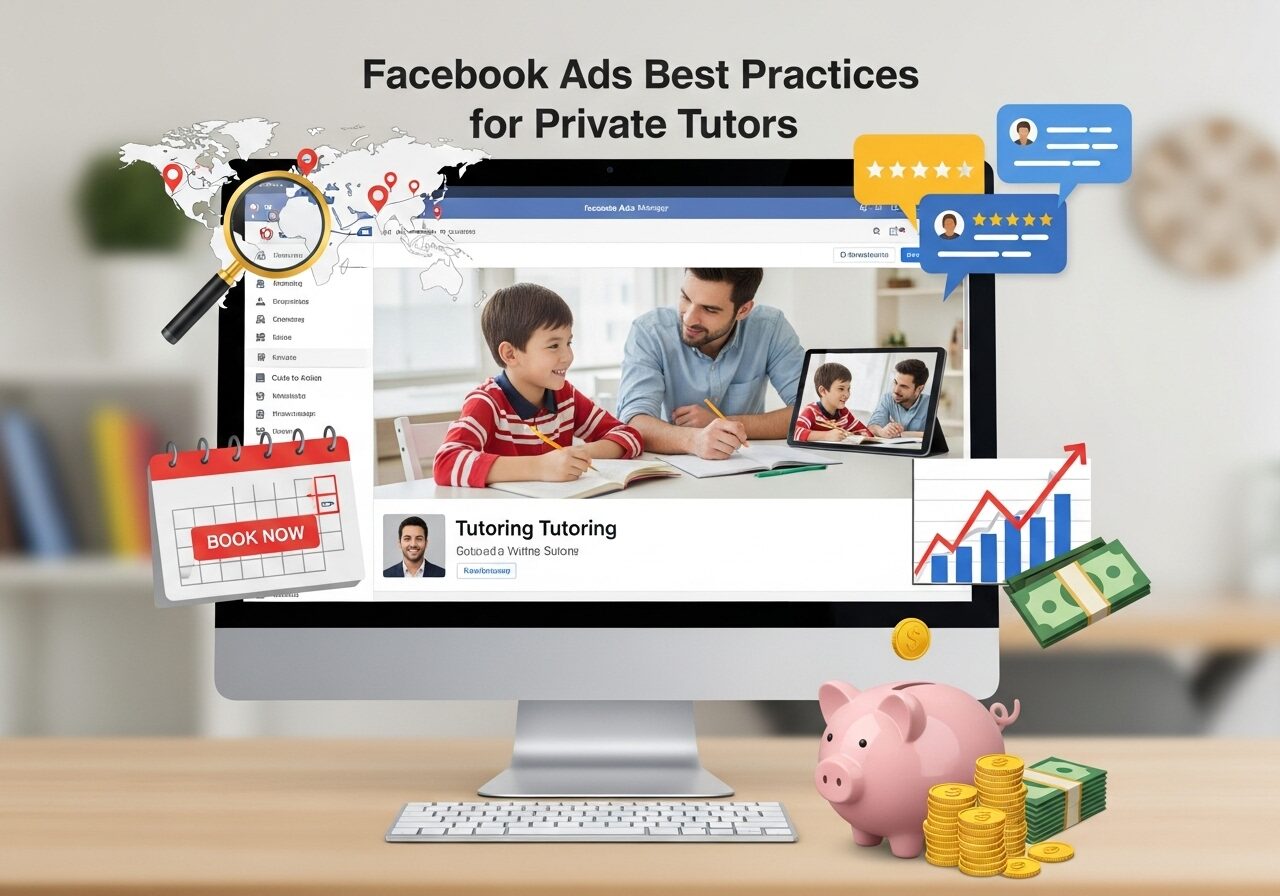
In this article, we will explain how to advertise tutoring on Facebook, from ad setup and creative strategy to audience targeting, budgeting, and optimization.
How to Advertise Tutoring on Facebook?
As a tutor, having an online presence is more than having a tutoring management software or having your own website. Advertising your tutoring services on Facebook can be beneficial for reaching students and parents in your area, as 68% of people aged 18-29 use Facebook.
Since Facebook allows you to target specific age groups, locations, and interests, your Facebook tutoring ads tend to reach the right audience.
Here is how to advertise tutoring on Facebook:
1. Set Clear Goals Before Paying Up for the Ads
If you want to gain results from a Facebook ad, it needs to have a clear objective. You must first ask yourself, what’s the main action you want people to take?
Here are a few options for you:
- Want parents/students to book a trial class? You can use Lead Ads or Message campaigns.
- Do you want parents or students to visit your tutoring website? Opt for traffic or conversion campaigns.
- Want to build awareness locally? You can use Reach or Engagement campaigns.
2. Choose the Right Facebook Ad Objective
Since there are different campaigns to choose from on Facebook, it can get overwhelming at times. You must decide on a campaign as per your goal.
For example:
- Lead Generation Ads: Collect contact info directly on Facebook. Great for tutors who call or message leads quickly.
- Traffic Ads: Route people to your website or a detailed landing page.
- Message Ads: Perfect for WhatsApp or Messenger follow-ups.
- Conversion Ads: Track real bookings using the Facebook Pixel.
If you want to get the best possible outcomes, you can build a simple yet effective 3-stage funnel:
Stage 1: Awareness: Opt to show a short lesson or testimonial video to create awareness about your brand.
Stage 2: Consideration: Offer a free 20-minute trial via Lead Ad.
Stage 3: Conversion: Retarget those who engaged but didn’t book.
3. Targeting the Right Audience
The real difference between real leads and wasted clicks is whether the target audience is right. Here is how you can target the right audience:
- Location: You can select your city or a nearby area (10–30 km radius).
- Age & Interests:
- Parents (30–55 years) for school tutoring
- Students (17–24 years) for college or test prep
- Interests: “Education,” “CBSE,” “SAT,” “Tuition,” “Exam Preparation”
- Lookalike audiences: Create from your existing student list.
4. Create a Facebook Tutoring Ad that Attracts the Right People
The Facebook tutoring ad does not need to be over the top; a simple, result-driven ad can also work. Try this formula:
Problem → Solution → Proof → Call-to-Action
Example: “Is math pulling your grades down? Get 1-on-1 tutoring to take your grades higher. 89% of our students have seen a rise in their scores within 8 weeks! Book a free trial now and change your score!”
Here are some tips that can help you further:
- Use short videos (15–30 sec) or carousel images.
- Show real students’ testimonials (with permission).
- Keep text short and easy to read.
- Always include a clear CTA like Book Now, Message Us, or Get Free Trial.
5. Using Facebook Pixel for Tracking Results
Getting Facebook Pixel will help you track who clicked, who filled out your form, and who booked a trial on your website.
In case you do not have a website, you can also use Lead Ads, where Facebook collects the information directly.
6. Build a Simple Lead Flow
Getting actual students for your tutoring is possible via Facebook tutoring ads if you follow a simple lead flow like:
Step 1: Offer a free trial or free worksheet.
Step 2: Get the students to fill out the lead form.
Step 3: Once you have received the student’s information, make sure to contact them within 24 hours through different ways, such as directly calling or using WhatsApp.
Remember, a quick follow-up increases the chances of converting the leads.
7. Expected Costs and Budget
You do not have to invest hundreds of dollars for one single ad from the very start. A few dollars a day is enough for testing the Facebook tutoring ads in the initial phase.
Typical results for tutoring ads in 2025:
- Cost per Click (CPC): ($0.50–$2.00)
- Cost per Lead (CPL): ($6–$10)
- Conversion Rate: Around 0.86%
Track results and scale as needed.
8. Test Different Versions
It is necessary to find what works for you. Test one change at a time:
- Image vs Video
- Different age groups
- “Free Trial” vs “Discounted First Class”
- New headlines
9. Facebook Marketplace Tutoring
One way to grow your tutoring business is to offer your services via Facebook Marketplace tutoring. However, it is not entirely ideal. There is a higher chance of getting scammed or getting fake leads.
Instead of Facebook marketing tutoring, use Facebook Page posts or paid local ads, as they attract higher-quality leads.
10. Build Trust and Credibility
To gain more students via Facebook marketing tutoring ads, it is necessary to build trust and credibility. Parents and students need to trust you before they hire you for your services.
Here is what you can do:
- Post student success stories (with permission)
- Share short teaching videos
- Offer free study tips or mini-classes
- Use testimonials or reviews in your ads
11. Track and Improve Every Week
Just investing money in routine Facebook marketing tutoring ads does not guarantee more students. You need to track the results and adjust the campaigns accordingly.
You must check these things periodically:
- CTR (Click-Through Rate) – Are people interested?
- CPC (Cost per Click) – Are you spending efficiently?
- CPL (Cost per Lead) – How much per inquiry?
- Conversion Rate – How many leads become paying students?
12. Smart Scaling
Not every ad will bring the same results. Once you have found an ad that works for you, you can:
- Gradually increase your daily budget slowly (20–30% per week).
- Create lookalike audiences from your best leads.
- Run retargeting ads for people who visited your page but didn’t sign up.
13. Stay Safe
For collecting student data, it is necessary to follow privacy rules. Also, if you have minor students, it is best to get parental consent before saving their information.
Conclusion
Running Facebook tutoring ads is not just about spending money; it is about spending it wisely to achieve gainful results. It is necessary to have the right strategy, give out a clear message, and target thoughtfully. Here, tutors can turn Facebook into a steady stream of student inquiries. It is necessary to showcase your expertise, build trust, and engage directly with the parents/students. With time, these efforts will bring results. Having only a tutor scheduling software is nothing if you don’t have students to teach; hence, use the best practices wisely to gain more students.
FAQs About Facebook Ads Best Practices
Is Facebook advertising effective for tutors?
Yes! Facebook ads are, by far, one of the most effective ways for tutors to find students. It allows accurate targeting based on different criteria like age, location, interests, and academic needs, ensuring your ads reach the right people instead of random users.
Can I advertise tutoring on Facebook Marketplace?
Yes. Facebook Marketplace tutoring listings can attract local students searching for nearby tutors. Add a clear title (e.g., “Online Math Tutor for Class 10”), mention your expertise, and include a professional image.
Should I use my personal Facebook profile or a business page?
Always use a Facebook Business Page. It gives you access to ad insights, professional branding options, and Meta Ads Manager, which you can’t get with a personal profile.
What are common mistakes tutors make with Facebook ads?
Common errors include vague targeting, using poor-quality visuals, skipping the ad testing phase, and failing to track conversions. Many tutors also forget to include a clear call to action.