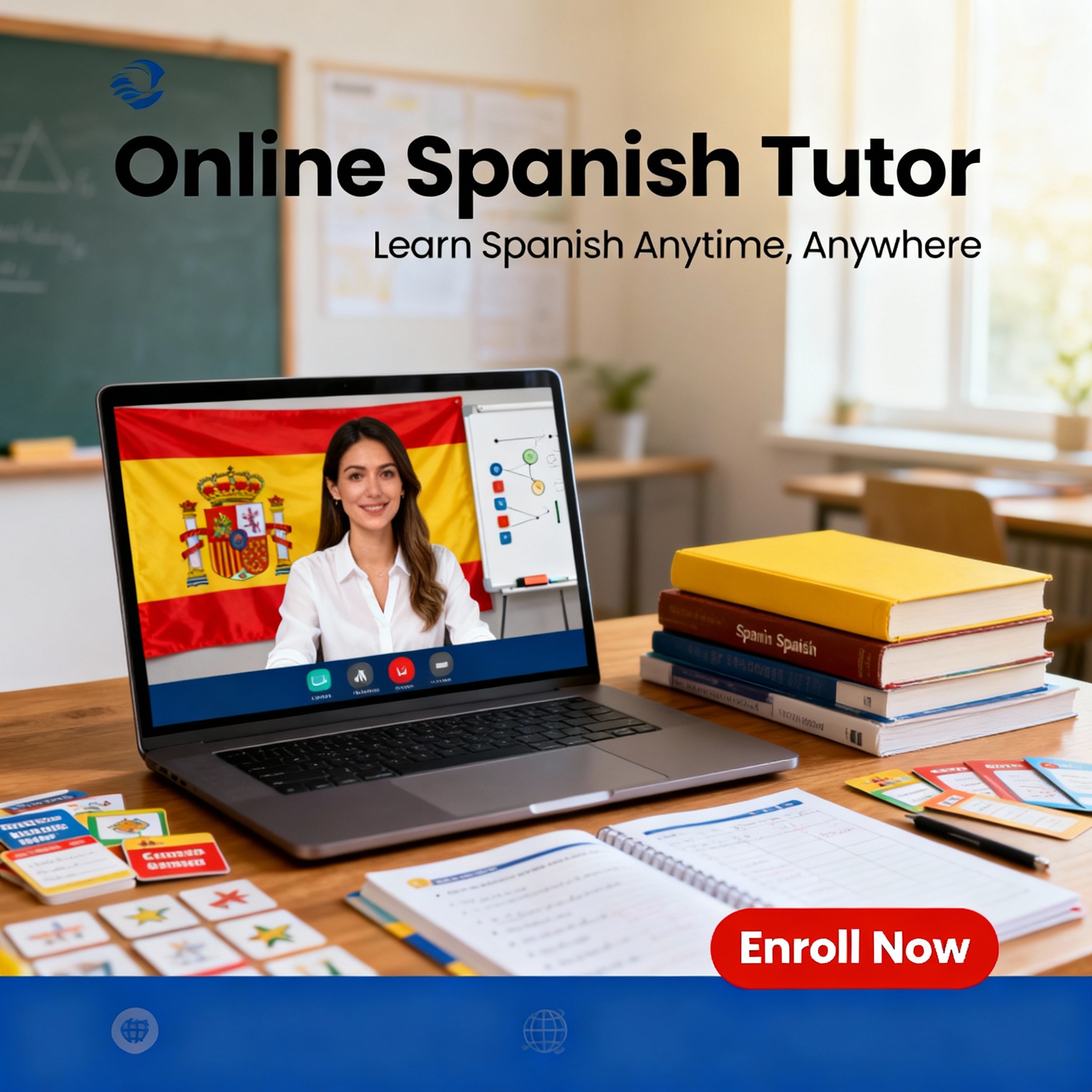
Becoming an online Spanish tutor in 2026 opens the door to a flexible, in-demand career you can run from anywhere. Spanish is one of the most valuable languages to learn, and remote learning has made online tutoring more accessible than ever for both tutors and students. Whether you are a native speaker or reached fluency through years of study, tutors who can teach the language well online are in real demand.
This guide covers both sides of the job. First, how to become an online Spanish tutor as a career: the skills, certifications, pricing, and marketing. Second, and just as important, how to actually teach Spanish online effectively once you have students, since knowing the language and teaching it are two different skills.
Quick answer: how to become an online Spanish tutor
For readers who want the short version:
- Strengthen your Spanish fluency, including grammar, pronunciation, and cultural context
- Choose a niche, such as conversational, business, exam prep, or Spanish for kids
- Get certified if you can, though fluency matters more than a certificate
- Set up reliable tech: strong internet, HD webcam, clear microphone, and a lesson tool
- Price your sessions by experience and niche, typically 15 to 60 dollars an hour
- Market yourself through a website, social media, and tutoring platforms
- Use tutor management software to handle scheduling, payments, and progress tracking
The rest of this guide expands on each of these and adds a full section on how to teach Spanish online, which is where most new tutors struggle.
How to teach Spanish online effectively
Most guides tell you how to become a tutor but never explain how to teach Spanish online once you have a student in front of you. This is what keeps students paying and referring you, so it matters most.
A strong online Spanish lesson balances all four language skills: speaking, listening, reading, and writing. Structure each session so no single skill dominates. A repeatable lesson flow looks like this:
- Start with a short warm-up conversation in Spanish to activate the student’s recall
- Introduce one new grammar point or vocabulary set, kept small and focused
- Practice it through speaking, not just explanation, since output builds fluency faster than input alone
- Use real materials such as news clips, songs, or short videos to keep lessons authentic
- Close with a clear takeaway and a small homework task to bridge to the next session
For teaching online specifically, use screen sharing for reading exercises, the chat box for spelling and vocabulary, and breakout-style speaking drills where the student talks more than you do. The most common mistake new tutors make is talking too much themselves. In a good online Spanish lesson, the student speaks the majority of the time.
Adapt to the student’s goal. A traveler needs practical conversation, a professional needs business vocabulary, and a school student needs exam-aligned grammar. Teaching the same lesson to all three is the fastest way to lose students.
Also Read: How to Become an SAT Tutor: A Step-by-Step Guide
Step by step: how to become a Spanish tutor
Step 1: Strengthen your Spanish language skills
Before offering lessons, make sure your command of the language is strong enough to teach it. Review advanced grammar, idiomatic expressions, and regional differences even if you are already fluent. Focus on pronunciation, since many students want to sound more native. Understand cultural context too, because teaching a language means teaching how it is actually used.
Step 2: Choose your niche
Not all students share the same goal, and a clear niche helps you stand out. Common niches include:
- Conversational Spanish for travelers
- Business Spanish for professionals
- Academic Spanish for school and college
- Exam prep for DELE or SIELE certifications
- Spanish for kids through games and stories
Step 3: Define your ideal student
Decide whether you want to teach beginners or advanced learners, children or adults, and individuals or groups. The clearer your target student, the easier it is to design lessons and market yourself.
Step 4: Get certified (optional but valuable)
Fluency matters most, but certification adds credibility and can justify higher rates. The main options are DELE, ELE teaching qualifications, and university Spanish teaching courses. None are mandatory to start, but they help you compete for higher-paying students.
Step 5: Set up the right tech
Your online classroom should feel professional and reliable. Essentials are a strong internet connection of at least 20 Mbps, an HD webcam, a clear microphone for pronunciation work, a lesson delivery tool such as Zoom or Google Meet, and an interactive tool like Quizlet for vocabulary practice.
Step 6: Organize lessons and admin with the right software
Managing multiple students, schedules, and payments gets overwhelming fast. A tutor scheduling software handles this by automating bookings, organizing lesson plans and materials, tracking student progress, and simplifying invoicing. This is what lets you take on more students without drowning in admin.
Step 7: Build your lesson structure
Combine structure with flexibility. Start each new student with a placement test to gauge their level. Mix all four skills across your lessons. Use real-life materials, and assign short homework to keep students engaged between sessions.
Step 8: Set your pricing
Rates depend on your experience, certifications, and niche. As a guide, beginner-focused tutoring runs $ 15 to $ 25 an hour, while business or exam prep tutoring runs $ 30 to $ 60 an hour. Package deals for long-term students improve retention and give you predictable income.
Step 9: Promote yourself
Students will not find you unless you market yourself. Build a professional website, use social media to share language tips and short videos, list on platforms like Preply, italki, or Verbling, and offer a free trial class to convert new inquiries.
Step 10: Manage scheduling across time zones
Online tutoring means students in different time zones. Tools that sync your availability, send automated reminders, and let students reschedule easily reduce no-shows and protect your time. This is one of the most practical reasons tutors move off manual booking.
Step 11: Track progress and keep growing
Great tutors adapt constantly. Keep records of vocabulary learned, fluency improvements, grammar corrections, and student feedback, and use them to adjust your lessons. Keep improving your own skills too, through webinars, tutor communities, and new teaching tools.
How much does a Spanish tutor cost?
Spanish tutoring rates vary based on the tutor’s experience, location, specialisation, and teaching format. Online marketplaces can be more affordable than private tutoring services. For example, Preply reports an average of about $17 per hour for private Spanish lessons, while Wyzant lists Spanish tutors at an average of $35 to $55 per hour.
| Spanish tutoring type | Typical cost per hour | Best suited for |
| Beginner Spanish tutoring | Around $17 to $20 | Students learning the basics |
| General Spanish tutoring | Around $15 to $30 | Everyday speaking, grammar, and vocabulary |
| Native Spanish tutor | Around $25 to $30 | Pronunciation and natural conversation |
| Business Spanish | Around $18+ | Professionals and workplace communication |
| Intensive Spanish | Around $18+ | Students seeking faster progress |
| DELE or SIELE preparation | Around $20 to $21+ | Students preparing for Spanish exams |
| Premium private tutoring | Around $35 to $55+ | Learners seeking experienced specialists |
These figures are marketplace reference points, not fixed industry rates. Preply’s 2026 data shows that Spanish tutoring prices vary by specialisation, with business and intensive Spanish lessons averaging around $18 per hour and DELE preparation around $20 per hour. Wyzant’s Spanish tutoring marketplace shows a higher average range of $35 to $55 per hour.
As a new tutor, you can start toward the lower end of the market while building reviews and teaching experience. As you develop a strong niche, gain relevant qualifications, and demonstrate results, you can adjust your rates accordingly.
How the right software helps you succeed
Running an online Spanish tutoring business is more than teaching. It is about managing schedules, tracking progress, and keeping students engaged. Software built for language schools and tutors streamlines scheduling so students can book instantly, sends automated reminders, keeps lesson notes and progress in one place, simplifies payments, and lets you share homework and materials directly. That frees your time for teaching, which is what actually grows the business.
Conclusion
Becoming an online Spanish tutor in 2026 is about more than speaking the language well. It is about teaching it effectively, managing your business smartly, and building strong relationships with students. Master your Spanish, find your niche, set up the right tech, learn to teach online properly, and use tools to handle the admin. Do that consistently and you can build a rewarding career that reaches students worldwide.
FAQs
How do I teach Spanish online with no experience?
Start by teaching what you know well through free or low cost trial lessons. Focus on getting the student speaking, use real materials like videos and songs, and structure each lesson around one clear goal. Collect feedback and refine your method as you go.
How do I become an online Spanish tutor with no experience?
Begin small. Improve your Spanish, pick a target audience, and offer trial lessons at lower rates to build confidence and testimonials. As your results grow, raise your rates and take on more specialized students.
What qualifications do I need to become an online Spanish tutor?
No formal degree is required, though certifications like DELE or ELE help you stand out. What matters most is your fluency, your ability to explain concepts clearly, and your skill at keeping students engaged.
How much can I earn as an online Spanish tutor?
Earnings depend on experience, niche, and location. Many tutors start at 15 to 25 dollars an hour, while specialized tutors in business Spanish or exam prep charge 30 to 60 dollars an hour or more.
Can I tutor Spanish online while working full time?
Yes. Many people tutor Spanish part time. With flexible scheduling tools, you can manage a handful of students after work or on weekends without affecting your main job.
What tools do I need to teach Spanish online successfully?
You need a reliable internet connection, a good webcam and microphone, a lesson delivery tool like Zoom, and a tutor management platform to handle scheduling, payments, and progress tracking in one place.