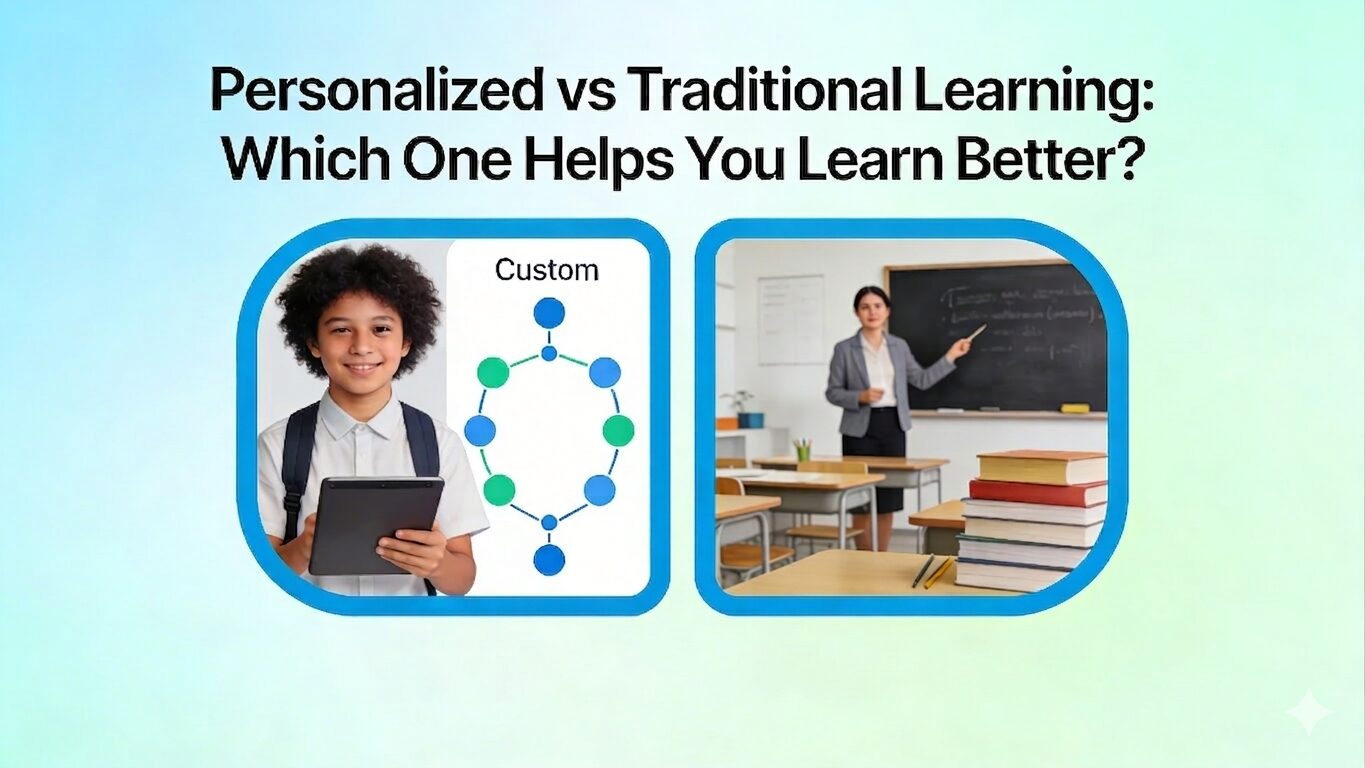
Education has evolved significantly over the last decade. Classrooms are no longer the only place where learning happens. Students today can learn through apps, tutors, online platforms, and customized lessons designed just for them.
This has led to confusion about personalized learning vs. traditional learning for both parents and students, especially given that the global personalized learning market is steadily rising, expected to reach USD 14.15 billion by 2029.
Choosing the right path for your education can feel like a big task. As the world changes fast, the way we learn is shifting too. You might be asking yourself: Is the old way still the best, or is it time for something new?
This guide explains the concept of personalized learning vs. traditional learning to help you see which one fits your goals.
What is Traditional Learning?
Traditional learning is the education model most people are familiar with. It typically takes place in classrooms where a teacher delivers lessons to a group of students simultaneously.
In this model, every student follows the same curriculum, timeline, and assessment methods.
Key characteristics of traditional learning:
- Instruction is more often teacher-led
- The syllabus and schedule are fixed in nature
- Standardized tests and grading systems
- Classroom-based discussions and lectures
- The pace remains the same for all students
For example, in a typical math class, the teacher explains a concept to the entire class. Students complete assignments and move on to the next chapter together.
While this system has been used for centuries, the conversation around personalized learning vs traditional learning has grown as technology enables new ways to teach.
What is Personalized Learning?
Personalized learning differs from traditional learning because it puts the student in the driver’s seat. Instead of following a fixed plan, the lessons adapt to what you already know and how you learn best.
This approach is commonly used in online education platforms and tutoring programs.
Features of personalized learning
- Customized learning pace
- Lessons adapted to student strengths and weaknesses
- Technology-driven assessments
- Flexible schedules
- Individual learning goals
Example: A student struggles with algebra but excels in geometry, the personalised learning system may provide additional practice and an engaging lesson plan specifically for algebra while allowing faster progress in geometry.
Real-World Example of Personalized Learning
Imagine two students learning the same subject.
- Student A attends a traditional classroom where everyone learns fractions at the same pace in the same way.
- Student B uses personalized learning. The system tracks individualised performance and adjusts the learning plan accordingly.
If Student B struggles with fractions, the platform provides additional examples, practice problems, and interactive explanations until the concept is clear.
This difference illustrates how personalized learning vs traditional learning can impact the learning experience.
Personalized Learning vs Traditional Learning: Key Differences
Understanding the differences helps clarify how each system works in real educational settings. Here are the differences when it comes to the concept of personalised vs. traditional learning:
| Aspect | Traditional Learning | Personalized Learning |
| Learning Pace | All students follow the same pace set by the teacher | Students learn at their own pace based on progress |
| Teaching Method | One teaching method is used for the entire class | Lessons are customized to individual needs and abilities |
| Curriculum Flexibility | Fixed curriculum with limited flexibility | Content can be adjusted based on student performance |
| Student Engagement | Often lecture-based with limited interaction | Highly interactive with adaptive learning activities |
| Assessment Style | Periodic exams and standardized testing | Continuous assessments and real-time feedback |
| Technology Use | Mostly classroom-based with minimal technology | Frequently uses digital platforms and learning tools |
| Teacher’s Role | Acts as the primary instructor delivering lessons | Acts as a facilitator or mentor, guiding individual learning via tools like tutor management software |
| Learning Environment | Mostly physical classrooms | Can be online, hybrid, or self-paced |
| Focus of Learning | Focuses on completing the syllabus for the class | Focuses on individual strengths and weaknesses |
| Learning Experience | Structured and uniform for all students | Highly customized and adaptive |
The Benefits of Personalized Learning
One of the biggest perks of this style is the higher engagement it drives. When you study topics that interest you, you stay focused. Research shows that personalized adaptive systems help students be more engaged and perform better compared to traditional settings.
Other benefits include:
- Mastery-based growth: You only move to the next level when you truly understand the current one.
- Better outcomes: A 2026 report found that students using AI-powered personalized systems saw a 62% increase in test scores because the tech caught learning gaps early.
- Flexibility: It works well for people with busy schedules or different learning styles.
Why Traditional Learning Still Matters?
Even with new tech, the classic classroom has strengths. It provides a social space where you can talk to peers and learn teamwork skills. For some, the strict schedule of traditional learning helps them stay disciplined.
However, it can be hard for teachers to help every single person in a large room. This is where tutoring tools become very helpful. They can bridge the gap by giving extra support outside of normal class hours.
Which Learning Style Is Best for You?
The answer depends on how you learn best.
Personalized learning may be better if:
- You prefer flexible learning schedules
- You want lessons tailored to your strengths
- You enjoy technology-based learning tools
- You want faster progress in specific subjects
Traditional learning may be better if:
- You prefer structured classroom environments
- You learn better through group discussions or group sessions
- You benefit from face-to-face teacher interaction
- You prefer fixed schedules and routines
The Rise of Hybrid Learning Models
Many modern education systems now combine both learning styles. Hybrid learning blends classroom teaching with personalized digital learning tools. The balanced approach helps institutions to leverage the benefits of both personalized and traditional learning systems.
Example: A school can teach core lessons in classrooms while using online platforms to provide customized practice activities.
Conclusion
In the end, the winner of personalized learning vs traditional learning is the one that makes you feel confident. If you feel stuck in a slow class, a personalized path might be your answer. If you feel lost without a schedule, the traditional route is a safe bet.
For many students, the best solution may be a combination of both approaches. Ultimately, when evaluating personalized learning vs traditional learning, the most important factor is choosing a method that supports your learning style, academic goals, and long-term success.
Frequently Asked Questions
Which is better: personalized learning vs traditional learning?
The answer depends on the learner. Personalized learning and traditional learning have their own strengths. Personalized learning works well for students who prefer flexibility and tailored instruction, while traditional learning suits those who benefit from structured environments and direct teacher interaction.
Why is personalized learning becoming more popular than traditional learning?
The rise of technology has made the debate over personalized learning vs. traditional learning a major topic in education. Digital platforms can track student progress and automatically adjust lessons, making learning more flexible and effective for many students.
Can personalized learning improve academic performance?
Yes. Research suggests that personalized learning can improve academic performance by focusing on each student’s strengths and weaknesses. This advantage often highlights the value of personalized learning vs traditional learning in modern education.
Is personalized learning more expensive than traditional learning?
Personalized learning requires technology platforms, training, and digital tools, which often tend to be on the expensive side. This financial factor is often discussed when comparing personalized learning vs traditional learning systems.